

Avoiding common hygiene non-conformances in food manufacturing: Top tips for internal hygiene audits
18 March 2026 | Megan Young, Safety, Quality and Hygiene Specialist
Hygiene in food manufacturing refers to the practices and conditions that help to prevent biological, physical or chemical contamination, which can greatly impact food safety. Maintaining strong hygiene practices in food manufacturing starts with understanding common / recurring non conformances and how they emerge in day to day operations.
The importance of focusing on site standards (including hygiene) can be seem from the top BRCGS non-conformances. Nine of the 10 most common BRCGS non conformances fall under Section 4 (Site standards), with Clause 4.11.1 (Hygiene) ranking as the most frequent issue across major and minor non-conformances combined. A further breakdown can be found in ‘Top BRGCS and FSSC non-conformances – what can we learn?’.
Fixes for issues with site standards and hygiene are often reactive rather than proactive, with facilities only being repaired upon audit non-conformance or an issue with contaminated product.
To successfully embed hygiene into manufacturing environments, we need to shift our mindset and ask: “Where in our facility is contamination most likely to occur, and how do we prevent it before it happens?”.
Here we look at some key areas of hygiene in more detail. Plus, we’ve included a five-point quick hygiene audit and some top tips for conducting an internal hygiene audit.
Cleaning and disinfection
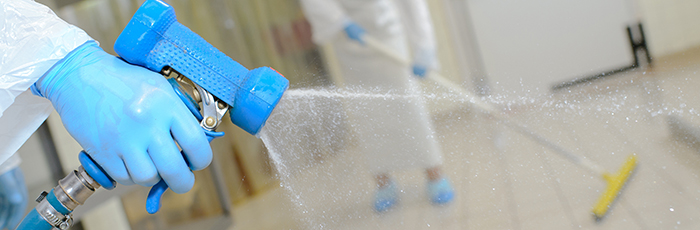
Effective cleaning and disinfection play vital roles in maintaining high hygiene standards through the consistent elimination of soil, control of microorganisms, and removal of allergen residues, ensuring that surfaces are left safe and fit for purpose.
There are four pillars to effective wet cleaning and disinfection:
- Chemical energy: Detergents and disinfectants – a suitable product needs to be selected dependant on the soil type.
- Mechanical energy: Scraping and scrubbing for manual cleaning, or flow rate and turbulence for CIP systems.
- Time: The amount of time spent cleaning, for example the contact time a solution is applied to a surface.
- Temperature: The specified temperature a cleaning detergent or disinfectant should be used at to be effective.
Dry cleaning mostly relies on mechanical energy and time to remove debris from equipment surfaces, using brooms and scrapers for example.
Reducing one of these four pillar factors often requires an increase in the other to maintain an effective cleaning and disinfection process. A validation of cleaning procedures can be used to demonstrate that a specific cleaning procedure is suitable for controlling the hazards associated with a particular process.
Additionally, it is important that cleaning equipment for different purposes is segregated, as dirty cleaning equipment can be a source of contaminants. Effective cleaning and disinfection, and appropriate storage, of the cleaning equipment itself is necessary.
It is also important to note that effective cleaning and disinfection cannot take place if there is poor facility design or construction.
Hygienic design of equipment
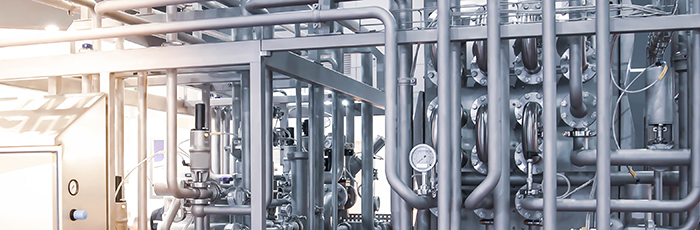
Hygienic design of food production equipment is essential in preventing contamination of food products and ensuring that equipment can be effectively cleaned and maintained. When machinery is not designed with hygiene in mind, cleaning becomes more difficult, and residues can accumulate in hard-to-reach crevices, joints and dead spaces. These retained residues create ideal conditions for microorganisms to survive, grow and potentially contaminate subsequent products.
Equipment can be said to be poorly designed in several ways. Some examples include:
- Rough welds, tight corners and exposed screw threads can lead to harbourage points that cannot be easily cleaned. These areas can accumulate food product (including allergenic material), dirt and microorganisms.
- Dead spaces and undrainable equipment where liquid can become trapped and stagnate, leading to biofilm formation and foul odours. Biofilms are communities of microorganisms that adhere to surfaces and produce a protective matrix, which makes them resistant to common cleaning processes such as chemicals or UV.
- Tight spaces between components or behind machinery that cannot be reached for manual cleaning often get ignored and accumulate dirt and debris over time.
Facility construction (doors/walls/ceilings/floors)
A well designed food facility relies on strong construction standards to help maintain a hygienic environment. Common BRCGS non-conformances fall under Section 4 (Site standards), including issues relating to doors, walls, ceilings and floors.
Doors should be in a good state of repair, with door seals intact to help prevent pests. It is important that there are no external doors into food processing environments as this can introduce environmental contaminants.
Both walls and ceilings should be in good condition, free from holes, as even small openings can lead to pest ingress or microorganism harbourage. It is best practice to seal any holes in fabrications, whether they lead to other areas or a dead end.
Cracked or chipped paint can expose porous surfaces and can introduce physical contaminants to food, especially when above open product. Porous surfaces allow soils and moisture to seep into the material, which can lead to harbourage and growth of microorganisms, and persistent hygiene issues that are difficult to remove through routine cleaning.
Broken floor tiles can be difficult to clean, and dips in flooring can create pooling water when not sloped towards a drain, leading to stagnant water and biofilm formation. This is especially troublesome in high foot traffic areas where contamination can be transferred to other areas of a food processing environment, for example through shoes or trolley wheels.
Personnel hygiene and food safety culture
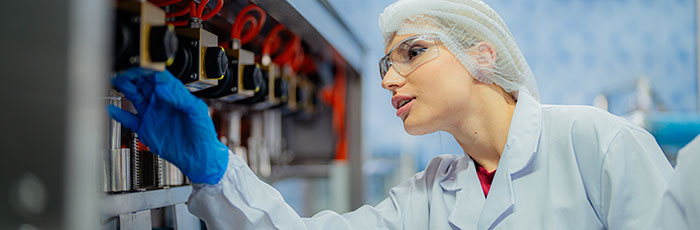
Whilst hygienic design and effective cleaning and disinfection can help to control food safety hazards, personnel can be a significant source and vector of contamination. This is because employees can introduce hazards through poor personal hygiene and touching contaminated surfaces, equipment or materials.
Controls can be implemented to help manage contamination risk through prerequisite programmes such as protective clothing, handwashing and effective segregation between production zones.
Training and a strong food safety culture are essential to reinforcing all good hygienic practices. When employees understand why hygiene matters and feel responsible for food safety, they are more likely to follow procedures and proactively identify / address potential risks.
What you can do today
To prevent contamination incidents and non-conformances, food business operators need to put in place practical measures that facilitate a clean, hygienic environment – ensuring that they can justify the schedules and practices in place, and are demonstrating compliance to the plan set out.
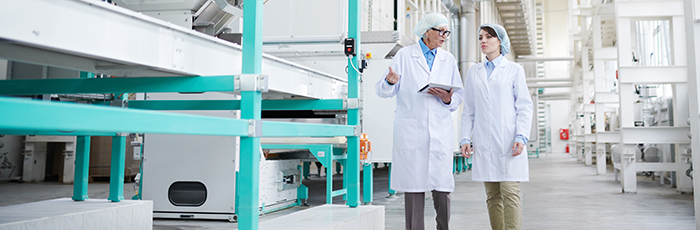
Internal hygiene audits are a great opportunity to both check and demonstrate compliance, as well as to proactively look for potential future risks and continuous improvement opportunities.
Our five-point internal hygiene audit is a great, quick starting point and our top tips can help you to develop your audits further.
Quick, five-point internal hygiene audit:
- Check all doors: Are seals intact? Any gaps? Any potential pest ingress risk?
- Inspect walls, floors and ceilings for cracks or damage, or surfaces that are no longer easily cleanable.
- Review machinery: Look under / behind for debris or uncleanable zones.
- Identify any undrainable or hard to access equipment surfaces.
- Observe operator hygiene behaviours in real time.
Top tips for conducting an internal hygiene audit:
- Bring in a fresh pair of eyes to spot issues that regular staff may overlook.
- Audit at different times of the day (pre operations, mid shift, post clean) to capture a full picture.
- Shift the focus from being reactive to proactive – by using audits to anticipate issues, not just respond to them.
- Engage team members during the audit; asking operators questions often reveals practical challenges and hidden risks.
Strengthen your hygiene standards with our expert support
Strengthen your food safety, hygiene standards and operational confidence with our expert hygiene support.
Effectively designing, managing and monitoring facility hygiene presents a complex challenge, but we are here to help. As leading experts in food hygiene, we can help you design your factory or food service area and offer advice on the flow, design of equipment within it, and how to arrange it.
Furthermore, we can support you in the design of hygiene programmes and environmental monitoring, and ensuring effective cleaning through validation and ongoing verification. We are also here to help with investigation work and troubleshooting when things go wrong.
Ensure your equipment, practices and processes are the best they can be — partner with us and elevate your hygiene performance today.
From environmental monitoring and tailored training through to consultancy and compliance guidance, our specialists can help you build robust, audit-ready hygiene systems that meet GFSI and legislative requirements. Get in touch to discuss your needs.
How can we help?
If you’d like to find out more about our expert hygiene support, contact us to discuss how we can help you.
Hygiene support
We offer expert, end-to-end hygiene support, from factory design through to hygiene programmes, validation and ongoing verification.