
Why recipe changeovers remain high risk for allergen management – and how to control them
6 March 2026 | Wendy Duncan, Safety, Quality and Allergens Manager
In today’s complex food manufacturing environments, recipe changeovers remain one of the most challenging and high risk points in production with respect to allergen management.
Despite improvements in cleaning technologies, and the growing prominence of allergen management in standards and retail requirements, changeover failures continue to feature heavily in audits and root cause analyses. Why?
Because the challenge is rarely about one thing – it’s a combination of technical, procedural and human factors.
This blog explores why recipe changeovers present allergen challenges for manufacturers, what misconceptions persist, and the key steps you can take to reduce allergen cross-contact risk.
The persistent challenge of recipe changeovers
Changing from a product containing an allergen to one that does not demands a robust and reliably executed process. While most factories have cleaning and verification procedures in place, audit findings from our consultancy and training work consistently show that these processes aren’t always implemented as intended. Common issues include unclear responsibilities, lack of documented decision making, and unrealistic timelines that create pressure at the worst possible moment.
Compounding this is the increasing complexity of product portfolios. More SKUs, smaller batch sizes, rapid turnarounds and a growing number of “free from” claims have all raised the stakes.
The human factor: Where risk truly lies
Recipe changeovers are often seen as a technical challenge, but human behaviour is a major contributor to risk. Teams may be under pressure to meet production schedules, meaning corners are unintentionally cut, or cleaning verification steps are rushed.
Three factors appear again and again in our training outcomes and incident reviews:
- Time pressure – Tight changeover windows drive shortcuts. Even well designed procedures fail if the time allocated is unrealistic.
- Assumptions and informal knowledge – Experienced staff may rely on habit rather than the documented method, especially if instructions lack clarity or are difficult to access on the line.
- Overconfidence in visual cleanliness – “If it looks clean, it must be clean” remains a common pitfall. Visual inspection alone is not an allergen verification method.
Cleaning validation: A misunderstood safeguard
Many sites believe that validating a cleaning method once is enough. However, validation is not static. It requires:
- Periodic revalidation;
- Re evaluation when formulations or equipment change;
- Consideration of worst case scenarios;
- Understanding how residues behave and where they can accumulate;
- Evidence that methods work across real life variability.
A validation performed five years ago on a previous formulation does not guarantee today’s control. Too often, validation reports sit filed away while production realities shift significantly.
How to strengthen recipe changeover allergen control
There are steps you can take to ensure a robust and reliably executed changeover process and reduce allergen cross-contact risk.
Here are just five ways to strengthen recipe changeover allergen control:
- Conduct a thorough allergen risk assessment – not just on ingredients, but on process flow, equipment design and human factors.
- Ensure changeover procedures are practical and precise – especially around difficult to-clean areas.
- Use appropriate verification methods – including rapid tests, swabbing strategies and periodic revalidation of the verification methods.
- Align changeover time allocation with reality – based on data, not assumptions.
- Invest in training that focuses on behaviour as much as knowledge – clarity and confidence reduce variation.
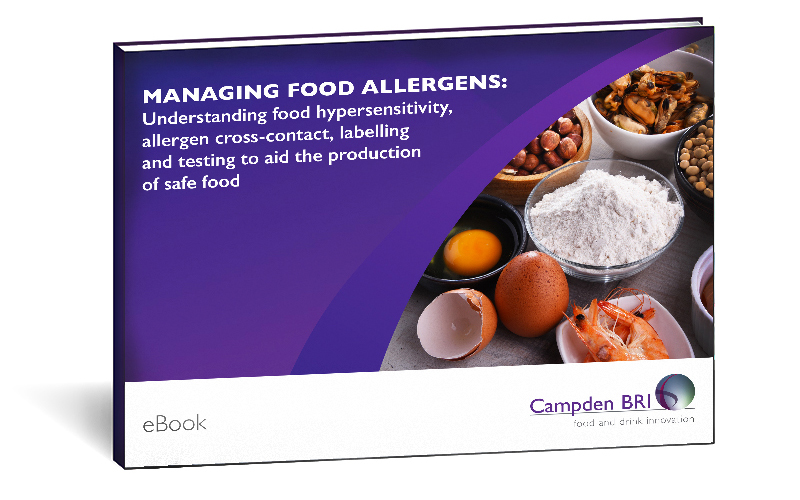
Download our FREE Managing Food Allergens eBook today! Secure food safety, control and confidence through effective allergen management
Reduce your risk
Recipe changeovers remain high risk for allergen management because they involve complex interactions between equipment, ingredients and people.
Misconceptions around cleaning validation, coupled with time pressure and procedural drift, mean these failures still appear frequently in audits.
However, with the right approach, practical procedures, updated validations, and competent training, sites can significantly reduce their risk.
We can help you strengthen your processes
We provide a comprehensive, holistic range of services to support your food allergen management needs, including; food safety management systems, gap analysis, allergen risk mapping, hygienic design, practical support with cleaning validation, allergen testing, cross-contact precaution strategies, quantitative risk assessment, and labelling and legislation.
We support members and clients with:
- On site allergen support, including changeover assessments, reviews of validation studies and verification procedure, and staff training.
- Gap analysis to optimise your food safety management systems (on site or remote).
- Cleaning validation studies and method optimisation.
- Audit preparation.
- Independent allergen risk assessments.
- Food allergen qualitative and quantitative risk assessment (QRA).
- Codex Alimentarius principles, GFSI standards, codes of practice and guidance.
- Incident management including root cause analysis (RCA).
- Allergen training courses, including Level 3 Allergen Management training.
- Allergen testing.
If you’d like help strengthening allergen changeover controls or reviewing your current processes, we’re ready to support you.

About Wendy Duncan
Wendy has over 25 years’ experience in the food manufacturing industry within the FMCG sector across the UK and Europe. Her career spans R&D, technical and nutrition roles, leading innovation and renovation projects across a wide range of categories including savoury and snacking, dressings, spreads, tea, plant-based products and ice cream.
She specialises in food allergen management and food safety systems. As allergen lead within the Campden BRI Food Safety Management Systems team, Wendy delivers training and consultancy to support clients in managing allergen risk and ensuring compliance.
How can we help?
If you’d like help strengthening allergen changeover controls or reviewing your current processes, we’re ready to support you.
Holistic allergen management support
We provide tailored, expert support in all areas of food allergen management – find out more below.