
Kill step complexity for Salmonella in cocoa products: Getting cocoa validation right
27 March 2026 | Rob Limburn, Section Lead (Industrial Process Microbiology) and Deputy Head of Microbiology
Salmonella is the major pathogen of concern in cocoa products. Validating its log reduction for cocoa kill steps can be complex – this must be done with the right expertise and care (to prevent lethality being overestimated or inaccurately measured) to ensure a safe product.
Salmonella in chocolate
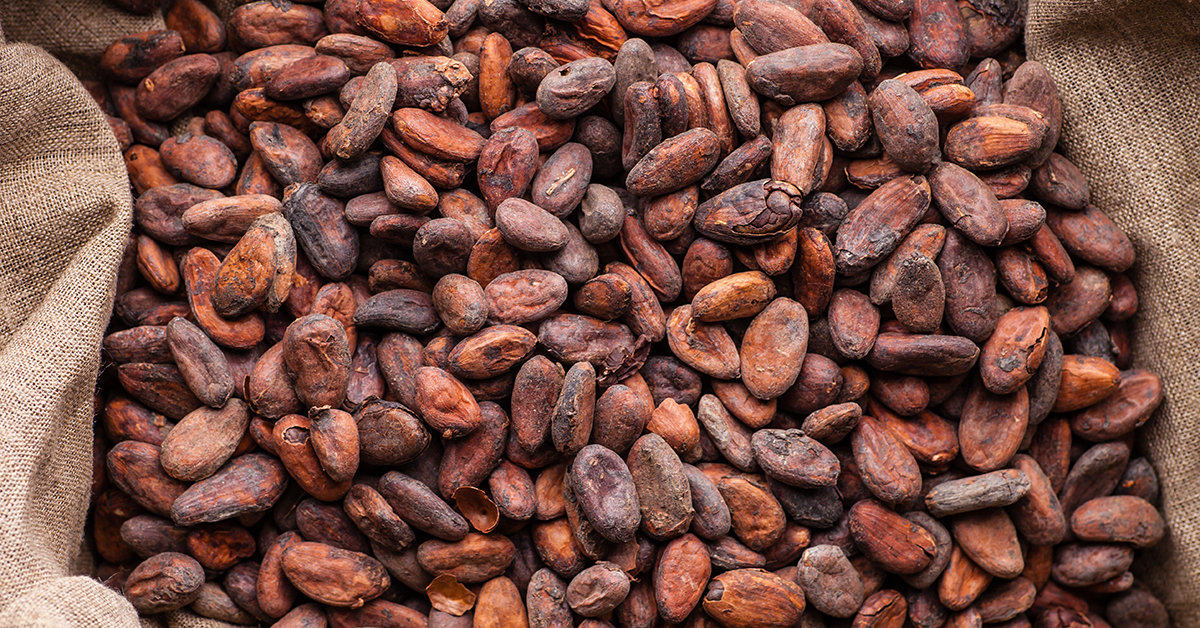
Chocolate and cocoa products have been implicated in many outbreaks of foodborne salmonellosis over the years. This is due to a combination of the vulnerability of raw beans to contamination during harvest and fermentation/drying, high levels of fat in many finished products (which may decrease the infectious dose required to initiate infection, by protecting the organism from the low pH conditions in the stomach), and the ability of Salmonella to persist under desiccated conditions for long periods.
A recent study conducted to assess and quantify the risk of salmonellosis from raw cocoa beans, and the subsequent impact of cocoa liquor processing (Zhao et al, 2024), reported the presence of Salmonella in 8.2% of the 870 samples of raw cocoa beans analysed during the study, at levels of 0.3-46 MPN/g.
A control step process delivering a minimum 5-log (99.999%) reduction in Salmonella has thus been established as a minimum requirement to reduce the risk of salmonellosis per serving of chocolate to an acceptable level.
Kill steps in cocoa processing
Several steps in the manufacture of cocoa products have a lethal effect towards Salmonella, including steam treatment of beans or nibs, dry roasting processes (with or without alkalisation), heat treatment of cocoa liquor, and de-odourisation of cocoa butter.
Amongst these, the most common processes to be identified as control measures are steam sterilisation (termed “debacterisation”) of cocoa beans and batch or continuous roasting of cocoa nibs.
These processes are dynamic in nature – the interaction of temperature, moisture / water activity, product density and flow characteristics, humidity, pressure/vacuum, and the introduction of steam or water at points during the process, all contribute to the level and uniformity of inactivation achieved towards Salmonella.
Therefore, the traditional approach to estimating process lethality (using microbial inactivation kinetic modelling, combined with time and temperature measurement) for validation is extremely challenging and may lead to inaccurate estimation of lethality.
Under these circumstances, microbiological challenge testing using a qualified surrogate microorganism is often considered to be the most appropriate kill step validation approach, and specific validation guidance has been published for many low moisture products (NACMCF, 2010; AOIE, 2012; ABC, 2007; ABC, 2014), including cocoa products (Cocoaval, 2024).
There are fundamental principles that need to be factored into the experimental design.
These approaches require the input of specialist microbiologists and thermal processing experts, as there are fundamental principles that need to be factored into the experimental design, as they may have a disproportionately large effect on measured lethality should they be incorrectly applied.
Ensure robust cocoa validation – how we can help
We have significant expertise in validation of control steps for cocoa products. Our industrial process microbiologists have extensive experience in process validation for low moisture products and have conducted multiple validations of cocoa processes.
We were an active part of the working group developing guidance on microbiological challenge testing (ISO 20976-2) as well as members of expert groups on risk assessment of low moisture products. We have also published multiple R&D reports on low moisture process validation (Archer et al, 1997; Archer, 1997; Archer et al, 1998; Limburn & Gaze, 2013; Potter et al, 2017).
We offer a comprehensive range of services for validation of cocoa kill steps, including:
- Microbiological challenge testing for cocoa nib roasters and debacterisers, both batch and continuous;
- Surrogate qualification studies – comparison of inactivation kinetics for relevant cocoa-related Salmonella strains and surrogate organisms;
- Lab-based studies for inactivation modelling;
- Temperature distribution and heat penetration studies;
- Consultation and troubleshooting assistance.
Each validation study is accompanied by a full report detailing the rationale, methodology, full results and interpretation/conclusions.
Our depth of experience in low moisture process validation allows us to be flexible in our approaches, ensuring that the validation study design is optimised for the specific product and process equipment under assessment.

About Rob Limburn
Rob has worked in Microbiology here within both Methods Research and Industrial Process Microbiology. He has been working in the food industry since 2004 and also has experience in allergens testing and authenticity testing.
How can we help?
If you’d like to find out more about validating Salmonella kill steps for cocoa products, get in touch.
Food microbiology
Protect your customers and brand from risk with our unique wrap around testing and advisory microbiology solutions.
References
- Almond Board of California, ABC (2007) Guidelines for Validation of Dry Roasting Processes. dry-roast-validation-guidelines.pdf
- Almond Board of California, ABC (2026) Guidelines for Using Enterococcus faecium NRRL B-2354 as a Surrogate Microorganism in Almond Process Validation. Version 3, January 1st 2026 SurrogateGuide_Digital.pdf
- AOIE (2012) Validating the reduction of Salmonella and other pathogens in heat-processed low-moisture foods 224455.pdf
- Archer, J., Jervis, E. and Gaze, J. E. (1997) R&D 40 - The development of inoculation and heating methods to determine the inactivation kinetics of Salmonella weltevreden in low moisture environments
- Archer, J. (1997) R&D 53 - The effect of water activity and relative humidity on the heat resistance of Salmonella weltevreden in a low moisture environment
- Archer, J., Bird, J., Gerbaud, S., Jacquiot, V. and Gaze, J.E. (1998) R&D 63 - Heat resistance of 5 in various low moisture foods
- Cocoaval (2024) Guideline for validation of thermal processes for reduction of Salmonella in cocoa processing. Guideline for thermal process validation cocoa_first edition v3_Nov 2024
- ISO 20976-2:2022 - Microbiology of the food chain — Requirements and guidelines for conducting challenge tests of food and feed products — Part 2: Challenge tests to study inactivation potential and kinetic parameters
- Limburn, R. D. and Gaze, J. E. (2013) R&D 344 - Heat resistance determination of Salmonella in low Aw foods
- National Advisory Committee for Microbiological Criteria in Foods, NACMCF (2010) Parameters for determining inoculated pack/challenge study protocols. Journal of Food Protection, 73(1), pp140-202
- Peanut & Treenut Processors Association, PNTPA (2022) Handbook for safe processing of nuts (4th edition) industry_handbook_oct22.pdf
- Potter, L., Limburn, R. D., Gaze, J. E., Ballard, C. and Leadley, C. (2017) R&D 422 - Development of low Aw food and environmental decontamination: inactivation kinetics
- Zhao, X., Jacxsens, L., Tzeneva, V., Kokken, M., Winkler, A., Vadier, C., de Toledo, N., Seliwiorstow, T. and Uyytendaele, M. (2024) Salmonella prevalence in raw cocoa beans and a microbiological risk assessment to evaluate the impact of cocoa liquor processing on the reduction of Salmonella. Journal of Food Protection, 87, 100327