
FAQs answered: Modified atmosphere packaging (MAP) products
9 February 2026 | Lynneric Potter, Section Lead - Packaging and Microscopy, and Linda Everis, Section Lead – Microbiology Safety and Spoilage
Modified atmosphere packaging (MAP) is used as a means of preservation and is well known in the food industry as a method to extend the shelf-life of a range of different food products.
It relates to the removal and subsequent replacement of atmospheric air with alternative gases that are optimal to the product, in order to provide the longest shelf-life while maintaining quality and safety. Changing the atmosphere in the headspace of a package can reduce biochemical changes, retard microbial growth and maintain organoleptic qualities, whilst reducing the need for additives.
We receive various packaging, microbiological / shelf-life and other enquiries relating to MAP products. Here we explore some FAQs and share some key considerations for each.
Q&A – we answer frequently asked questions about MAP products
1. What gas mix should I use for my MAP product?
The interaction between the gas and the food is critical and needs to be understood to select the correct gas mixture. Commonly a mixture of one, two or three gases, usually nitrogen, carbon dioxide or oxygen are used.
The gases used play an integral role in the finished pack, and their necessary selection and ratios will be dependent on factors such as product category / type, shelf-life requirements, and microbial control.
We cover this in our MAP training course, which is available to book as a standard, scheduled course or a bespoke course for your business.
2. Are there shelf-life limitations for MAP products?
The UK Food Standards Agency (FSA) have specific guidance on shelf-life requirements for vacuum packed (VP) and low oxygen MAP products.
Reducing the oxygen levels in a pack (through MAP) and replacing with carbon dioxide and nitrogen gases has a dual effect. Eliminating oxygen prevents the growth of strictly aerobic bacteria, some of which are potent spoilage microorganisms, whilst carbon dioxide is itself antimicrobial, helping slow the growth of many microorganisms. However, by removing oxygen, the growth of anaerobic microorganisms may be favoured – lactic acid bacteria may become a prominent spoilage microorganism, and pathogens such as non-proteolytic Clostridium botulinum (C. botulinum) may, if present, be able to grow.
VP/MAP chilled foods therefore need controls in place to minimise the risk of C. botulinum growing and producing harmful levels of toxin, throughout the shelf-life of the product. The FSA guidance specifies a limited shelf-life, unless particular parameters of pH, water activity (aW), salt or thermal process are used, or it can be proven that non-proteolytic C. botulinum will not grow (such as via predictive modelling or challenge testing).
Alongside considerations and constraints relating to C. botulinum, other relevant microorganisms and risks must also be factored into shelf-life determination. For example, Listeria monocytogenes can also grow under VP/MAP conditions, and other microorganisms may be able to survive.
3. What are the impacts of freeze-thaw / frozen distribution on MAP products?
There has been a limited amount of research in this area, but one of the main considerations of thawing a product could be a resultant increase in available moisture, which could affect carbon dioxide absorption and therefore shelf-life.
A representative study would need to be conducted to fully understand, verify and validate the impact on shelf-life for a specific product.
4. How much residual oxygen do I need in my MAP pack?
Oxygen is usually removed from the pack, particularly with dried foods, ready cooked products and those with high fat contents, to reduce oxidation and inhibit aerobic microbial growth. In terms of a residual oxygen level to aim for, this should be as low as possible for maximising shelf-life in oxygen-sensitive products.
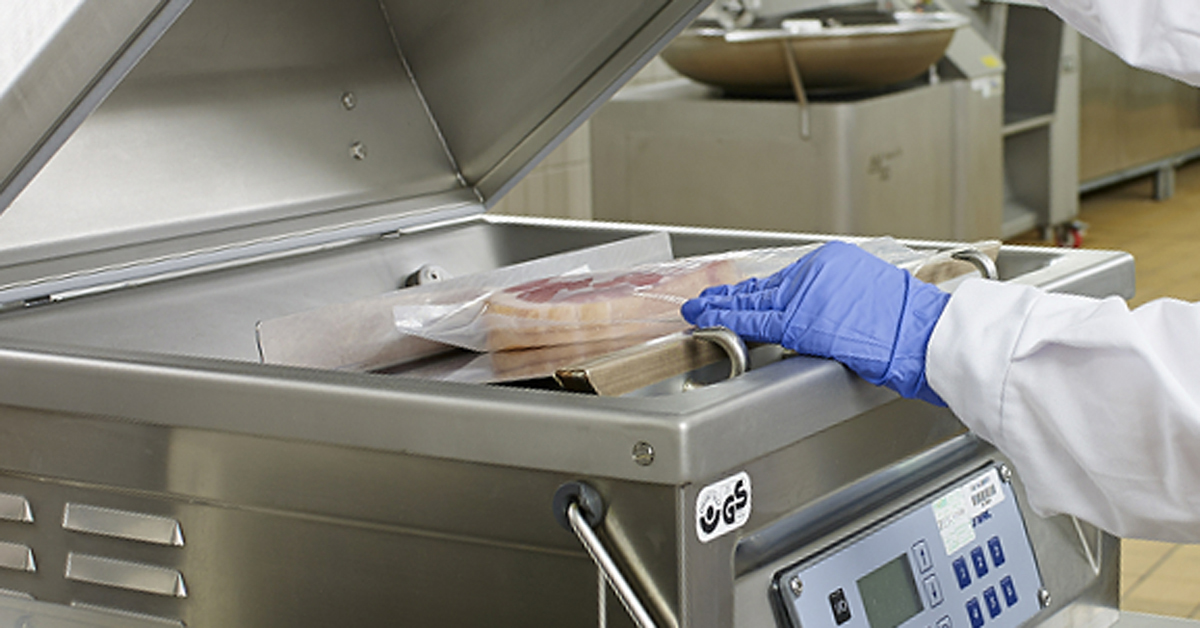
Gas packing relies on a continuous stream of gas being injected into the pack to replace the air. The disadvantage of gas packing is that the residual oxygen levels can be higher, which make it an unsuitable method for oxygen-sensitive products. Compensated vacuum can be slower as it is a two-stage process, but the residual oxygen levels are usually lower. Whatever your packing method for minimising oxygen, the level achieved will depend on the efficiency / effectiveness of the packing equipment.
The way residual oxygen is measured (particularly the timing of the testing) is also a factor. Oxygen can be both released and absorbed by the product inside the pack at different stages of its life. To fully understand the oxygen level in your pack, this should be measured after a delay (rather than straight after packing) and throughout shelf-life when conducting shelf-life studies.
5. Why is my MAP pack blowing (or collapsing)?
The most common reason for a blown pack is the production of carbon dioxide by microorganisms growing in the product, typically yeast and/or lactic acid bacteria.
Collapsing packs, on the other hand, are usually due to using high levels of carbon dioxide. Its solubility makes it susceptible to absorption by fat and moisture within the product. Nitrogen is often included in gas mixes to prevent this issue.
Oxidation (reactions linked to rancidity) cause oxygen absorption, as does oxygen usage by microorganisms, both of which can reduce the amount of gas volume in the pack and lead to a collapsing pack.
Using the right packaging to be able to hold the gas inside, without escaping, is also important to prevent pack collapse. Products packed in a modified atmosphere require the materials to have specific barrier properties and maintain seal integrity for the duration of the shelf-life of the product, or the modified atmosphere will be lost. This is important when looking to move to changed or new packaging materials, which must provide equivalent properties to ensure the quality and safety of the product is maintained.
6. Can I reduce the amount of carbon dioxide used in my MAP pack?
With carbon dioxide shortages being a common issue affecting the food and drink industry, it is pertinent to understand the impact of reducing the level of carbon dioxide in your product’s MAP gas mixture.
Carbon dioxide is normally included as an antimicrobial agent. A minimum of 20% carbon dioxide is often suggested to have an effect, but there is little scientific data to back this. It is often used in combination with nitrogen to form an anaerobic environment to inhibit aerobic microorganisms. The concentration of dissolved carbon dioxide in the water phase of food helps to inhibit some microorganisms (for example, gram-negative microorganisms, such as Psuedomonas).
Raw and cooked meats, fish, ready meals, combination products and bakery goods will all commonly be packed with a proportion of carbon dioxide. Inclusion levels of 25-40% are common, whereas in bakery goods (to increase the mould-free shelf-life) and some cheeses it can be used up to 100%.
When reducing the level of carbon dioxide in MAP gas mixes, it is important to ensure that food safety and shelf-life are not impacted. This can be determined by shelf-life studies – including product packed without any carbon dioxide into your shelf-life studies are a good way to understand the impact ahead of being affected by a carbon dioxide shortage.
Testing and expert support for your MAP products
Renowned as an independent expert in the food and drink industry, we have more than 200 scientists and technical experts collaborating on a wide range of projects every day. No matter our client’s challenge, we consistently deliver innovative solutions, helping them deliver key strategic projects and realise their vision for the future.
Furthermore, we help with the food safety assurance of your end-to-end supply chain, including microbiology support, product testing, hygiene consultancy, process control, decontamination methods, food safety and quality management systems, incident management, root cause analysis and more.
Some of the areas we can help with when it comes to modified atmosphere packaging (MAP) products are:
- Packaging and associated testing – from establishing required
tests through to interpretation and support;
- E.g. Gas headspace analysis, and Determination of gas volumes;
- Seal integrity and overall pack integrity – routine testing and investigation of issues;
- Shelf-life storage trials – including packaging, microbiology and sensory testing;
- Shelf-life maximisation and extension;
- Troubleshooting – with packaging, microbiology and thermal processing experts;
- Microbiological testing – including identification of the organism involved in a contamination issue;
- Consultancy;
- Training, including a specific course on MAP (standard scheduled online course, or bespoke course).
Get in touch to join those benefiting from expert support with microbiology, packaging, MAP and more.

About Lynneric Potter
Lynneric has worked at Campden BRI since 1999, and has spent the majority of this time specialising in all things packaging, including supporting members and clients, managing contract projects, and conducting research.

About Linda Everis
Linda has a wealth of knowledge, experience and expertise from her time in Microbiological Analytical Services and Microbiology Safety and Spoilage. She joined Campden BRI in 1995 as a Senior Technician in the Microbiological Analytical Services group having graduated from the University of Wales Aberystwyth with a BSc in Biology.
Alongside the expert support that Linda provides to our members and clients, Linda conducts project work and research, and has been author and co-author of articles and papers for a variety of microbiological publications and Campden BRI reports.
Linda also lectures on shelf-life, challenge testing and predictive microbiology for our many training courses and seminars.
How can we help?
If you’d like support with your modified atmosphere packaging (MAP) products, get in touch.
Food microbiology
Protect your customers and your brand from risk with our unique wrap around testing and advisory microbiology solutions.