
Nitrites and nitrates – reduction in the levels that can be used in various food commodities in the EU
18 December 2025 | Linda Everis, Section Lead – Microbiology Safety and Spoilage, Mike Adams, Head of Product Innovation and Insights, and Sharon Morey, Regulatory Affairs Manager
New EU legislation reduces the levels of nitrites and nitrates that can be used in products such as cured meats and processed fish products.
Here we cover more on this legislation, how this relates to the function of nitrates/nitrates within products such as cured meats, and what support we can offer in relation to this change.
The legislation – what has changed
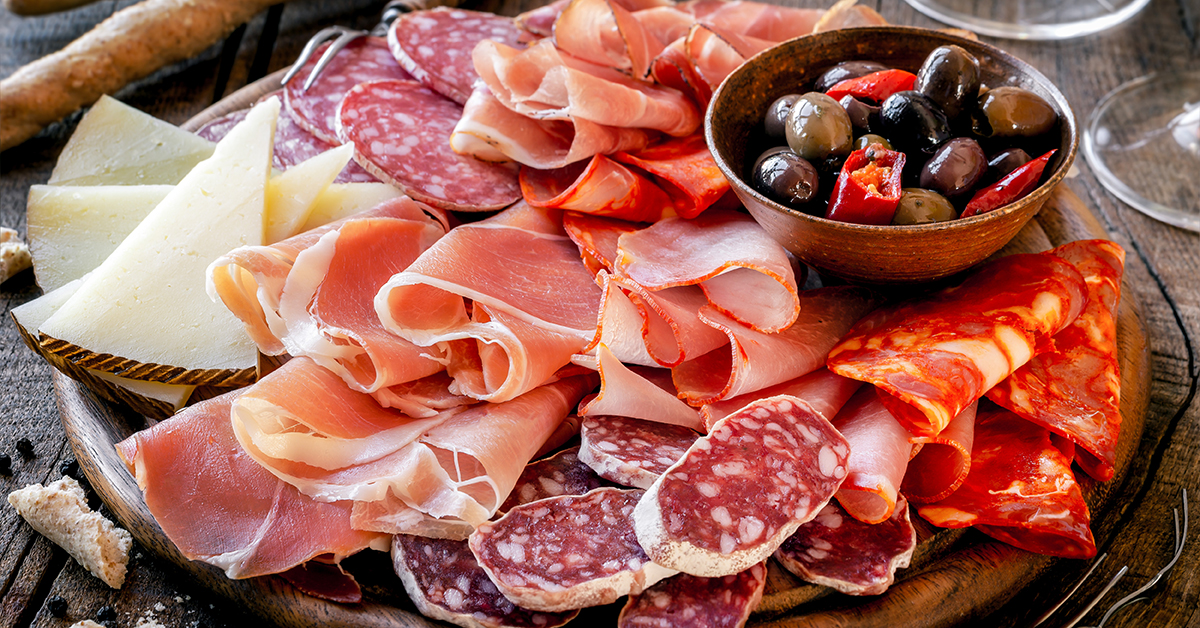
New EU legislation – Commission Regulation (EU) 2023/2108 effective from October 9, 2025 – made changes to the additive provisions in Annex II of the EU version of Regulation 1333/2008, which reduced the levels of nitrites and nitrates that can be used in various food commodities, such as cured meats, cheeses and processed fish/fishery products.
The changes to nitrite/nitrate limits have varying transition periods, depending on the food category. In all cases food can be placed on the EU market up until the end of the relevant transition period and can then remain on the market until they reach the end of their durability. This applies to products intended for the market in all EU Member States and also for Northern Ireland.
The function of nitrates / nitrites
The use of nitrate and nitrite salts has a number of functions – microbiological control, colour preservation and flavour/aroma. See the ‘how we can help’ section for details on the support we offer in each of these areas.
Microbiological control
Nitrate and nitrite salts are used as preservatives (e.g. they are typically included in the salting of meat and fish), namely in the inactivation of Clostridium botulinum (C. botulinum), Bacillus cereus, Listeria and Salmonella.
The aim of the new limits is to keep nitrosamines formation (formed from nitrates and nitrites) as low as possible whilst still ensuring microbiological safety of the food products.
Colour
Nitrites enhance the colour of cured meats by reacting with myoglobin (the protein that makes fresh meat red) to form nitrosomyoglobin and nitrosylmyoglobin, which give a pink/red colour – preventing the greying that would otherwise occur.
Flavour
The ‘cured’ flavour of processed and cured meats comes from the chemical reactions (formation of nitric oxide) associated with nitrites. They also prevent off flavours by preventing lipid oxidation (by neutralising reactive oxygen species, interrupting the reactions that drive lipid degradation).
How we can help
Microbiology support
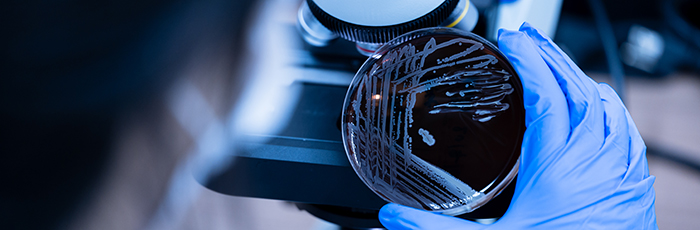
When something changes in your product, taking nitrite levels as an example, we can conduct shelf-life testing to determine the microbiological safe shelf-life of your product. We can carry out inoculated microbiological growth challenge testing studies looking at growth of the relevant microorganism in a range of food products over shelf-life. We can do this with various pathogens, including studies with C. botulinum (in our dedicated C. botulinum laboratory).
Download the complete Maximising Shelf-life eBook, for free, to unlock the tools for measuring and maximising the shelf-life of your food and drink products whilst ensuring their safety and quality.
Colour / flavour support
We can help with sophisticated colour measurement techniques, as well as advise on how colour can be achieved with the use of natural colouring agents to mimic the changes associated with nitrite use, as well as the use of natural antioxidants.
Through sensory testing, we can help you monitor or qualify acceptable flavour differences, inform you whether differences are noticeable, and help you understand exactly what those differences are. Through consumer testing, we can help you understand whether any differences are likely to impact consumer acceptance.
Regulatory support
Our Regulatory Affairs Team offer a valuable, extensive and authoritative information and advisory service to help clients stay compliant with food regulations in more than 80 countries. Whatever the legislative requirements of your target market, our experienced team of regulatory experts can help you ensure your products are compliant.
Food and drink analysis and testing
We offer a comprehensive range of food testing solutions to assist the food and allied industries in meeting their regulatory requirements, quality assurance and consumer expectations.

About Linda Everis
Linda has a wealth of knowledge, experience and expertise from her time in Microbiological Analytical Services and Microbiology Safety and Spoilage. She joined Campden BRI in 1995 as a Senior Technician in the Microbiological Analytical Services group having graduated from the University of Wales Aberystwyth with a BSc in Biology.
Alongside the expert support that Linda provides to our members and clients, Linda conducts project work and research, and has been author and co-author of articles and papers for a variety of microbiological publications and Campden BRI reports.
Linda also lectures on shelf-life, challenge testing and predictive microbiology for our many training courses and seminars.

About Sharon Morey
Sharon has worked here at Campden BRI since 2016, and also has a wealth of knowledge and experience from previous regulatory, technical and other roles.
Sharon studied Nutrition, and has previously worked at Quest NutraPharma (Regulatory Affairs Manager/ Nutritionist and Training Manager), BioCare Ltd (Technical and Customer Development Manager) and Holland & Barrett Ltd (Regulatory Affairs Officer/Retail Training Officer/ Customer Service Manager/Public Relations Officer).
Alongside supporting clients and projects within Regulatory Affairs, Sharon presents on scheduled and tailored training courses in all aspects of Food Law. She has also contributed to and written articles for nutritional and pharmaceutical trade and consumer publications.
How can we help?
If you’d like support relating to nitrate/nitrite levels, get in touch
More on microbiology
We offer consultative expertise and support in all areas of food microbiology.