
EU-Mercosur new trade agreement: What it means for food brands looking to expand internationally
11 February 2026 | Michelle Barreto, Regulatory Affairs Advisor
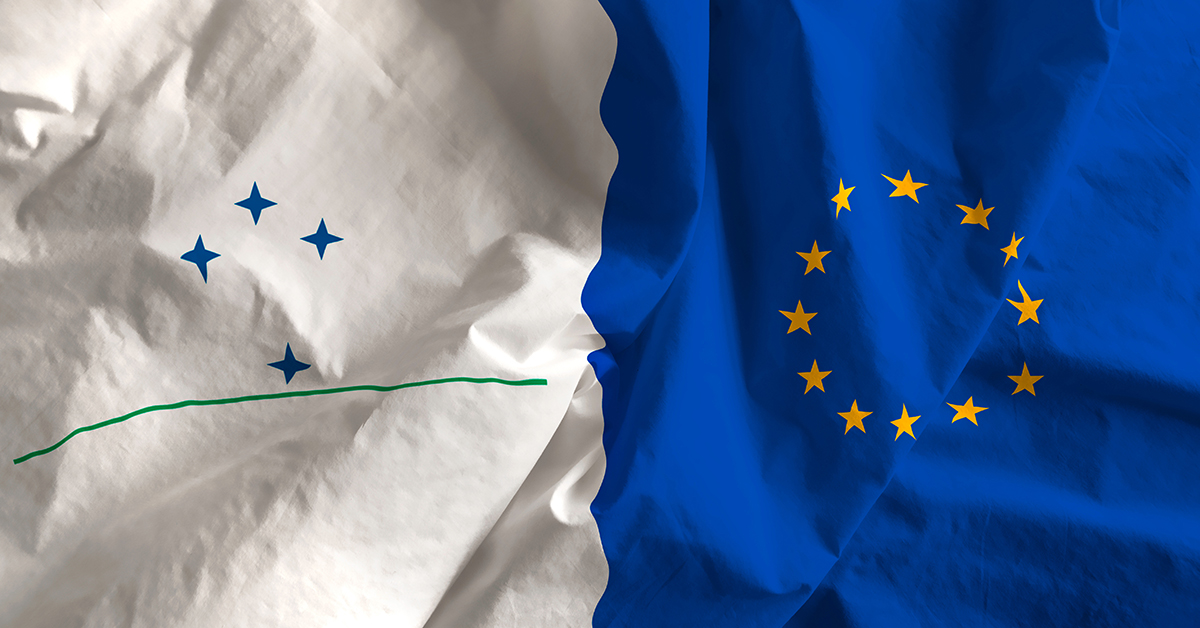
After more than 25 years of negotiations, on 17 January 2026, the European Union and the Mercosur bloc (The Southern Common Market; South American trade bloc) signed a new Partnership Agreement and an Interim Trade Agreement. This milestone creates one of the world's largest free-trade areas, linking the 27-country EU and the four Mercosur founders (Argentina, Brazil, Paraguay, and Uruguay) into a market of about 700 million consumers.
For food and drink businesses, the pact opens the door to unprecedented cross-continental opportunities.
Big opportunities require careful planning – the agreement will liberalise trade while preserving the EU’s high food safety and strict sustainability standards; changes that will shape how Mercosur food businesses operate. At the same time, safeguards for sensitive agri-food sectors, tougher competition from lower-cost imports, and a complex regulatory landscape will challenge EU food companies.
What the deal offers: fewer tariffs, smoother trade
Under the agreement, about 92% of EU import duties on Mercosur goods and 91% of Mercosur duties on EU exports will gradually disappear over the next decade. This sweeping liberalisation will make European wine, spirits, chocolate, cheeses and processed foods more affordable in Latin America, while Mercosur's agricultural products will gain improved access to EU shelves.
The European Commission estimates that EU exports to Mercosur could rise by around 39%, adding roughly € 49 billion in annual sales and supporting hundreds of thousands of jobs. Beyond tariffs, the deal includes modern customs provisions and digital trade rules to streamline documentation and speed up border checks, giving exporters greater predictability and cutting compliance costs.
An important feature for brand owners is the recognition of 344 EU geographical indications (GI). This means iconic names like Champagne, Roquefort or Prosciutto di Parma are legally protected across the Mercosur, preventing imitations and helping premium products maintain their reputation.
Quotas and safeguards: protecting sensitive sectors
To protect EU farmers and ensure fair competition, the EU negotiated tariff-rate quotas for sensitive products. For example, annual beef imports from Mercosur will be capped at 99 000 tonnes with a 7.5% duty; a volume equivalent to only about 1.5% of EU beef production and less than 0.6% of Mercosur's output.
Quotas also apply to sugar, rice, honey, ethanol and dairy products, with duty-free volumes phased in over several years. Such calibrated limits are designed with the intention that market access will grow, but not at the expense of domestic producers.
Alongside quotas, the agreement introduces a legally binding safeguard mechanism. If imports of a sensitive product surge by at least 5% and prices fall more than 5% below domestic levels, the EU Commission can launch an investigation. The Commission have committed to follow market trends closely and report to the Council and Parliament every six months.
These safeguards, combined with enhanced border inspections and audits, provide a safety net for EU farmers while allowing trade to expand.
Food safety and sustainability: standards are non-negotiable
The EU-Mercosur agreement confirms that all products sold in the EU, whether imported or locally produced, must meet the same sanitary and phytosanitary (SPS) standards as EU products. These rules cover everything from pesticide residues and veterinary drug use to animal welfare and plant health requirements.
The agreement does not lower EU food safety standards and Mercosur imports into the EU must continue to meet the EU’s own standards. On the other hand, EU food exporters are not exempt from complying with Mercosur SPS standards and related requirements.
The Commission and Brazil are setting up permanent SPS dialogue so regulators can share information and minimise trade disruptions through the EU-Mercosur SPS Committee. The Commission is also strengthening controls through more audits in exporting countries and tighter checks at EU borders.
Opportunities for EU-Mercosur food brands
For EU food businesses, the most exciting prospect is access to a dynamic consumer base in South America.
Mercosur’s roughly 270 million strong population is younger than that of the EU and includes a sizeable working age cohort, with income growth and middle class expansion in parts of the region, though affluence levels and trends vary significantly by country.
High tariffs, which are currently up to 35% for wine and other beverages, 28% for cheese and 20% for chocolate, will be dismantled over time, making EU products more competitive. Other products have high tariffs in percentage terms: rice (5-22%) and sugar (42-52%). In return, EU brands benefit from legal protection for their traditional names and harmonised customs procedures that are faster and more predictable.
There is also scope to diversify all export goods. In 2024, EU agri-food exports to Mercosur were worth about €3.3 billion. With tariffs falling and non-tariff barriers eased, companies producing olive oil, malt, milk powder, infant formula and specialty foods will find it easier to enter South American markets.
The agreement also creates meaningful opportunities for Mercosur producers looking to expand into Europe. Tariffs will be eliminated on around 92% of Mercosur exports to the EU, improving access for key agricultural goods and reducing the cost of entry into one of the world’s most valuable markets.
For exporters of beef, poultry, sugar, fruit, juice and processed ingredients, the EU offers higher-value markets and more stable demand. Preferential quotas and reduced duties, such as the new beef quota with lower tariffs, allow South American suppliers to redirect products toward premium European buyers.
The deal may also encourage Mercosur companies to reduce tariff escalation and simplify customs procedures, becoming easier to export processed and branded products rather than only raw commodities. In addition, more than 200 Mercosur geographical indications (GI) will gain recognition and protection in the EU, helping regional specialities differentiate themselves and build brand value internationally.
Managing challenges and staying compliant
Greater openness will bring stronger competition at home for EU-Mercosur food businesses.
Mercosur suppliers operate at lower production costs and will expand exports of beef and poultry in particular with more limited, quota-based increases for products such as sugar and rice, where there will be an increase through quotas (but volumes are limited and unlikely to dramatically change the EU market). By contrast, soy already enters the EU largely tariff-free, but as a result of internal Mercosur policy, it is expected that export taxes will be reduced, which could put pressure on EU prices.
Some Member States and farm organisations worry about unfair competition and environmental impacts. This makes compliance and vigilance essential for EU food businesses. EU food companies need robust procurement policies to ensure imports from Mercosur meet EU rules on pesticides, labour and animal welfare.
At the same time, food businesses in Mercosur that want to export to the EU will need equally strong regulatory and compliance strategies. Under the EU-Mercosur agreement, all products entering the EU must continue to comply with the EU’s strict SPS standards.
To succeed, food brands should adopt a proactive compliance strategy, including investing in supply chain traceability systems, and updating labels to reflect origin, sustainability and geographical indications (GI) status.
If you need advice on meeting EU or Mercosur food standards, our Regulatory Team is ready to help. We offer product assessments, label reviews, market-entry support and tailored training. To learn more about how we can support your needs, please get in touch.
This support is part of our valuable, extensive and authoritative information and advisory service to help clients stay compliant with food regulations in more than 80 countries. Whatever the legislative requirements of your target market, our experienced team of regulatory experts will ensure your products are compliant.
How can we help?
For advice on complying with EU or Mercosur food or labelling standards, please get in touch.
Regulatory expertise
Our experts can help you ensure your products are compliant with the legislative requirements of your target market.