
Sustainable packaging innovation: How to validate new and alternative food packaging materials
21 October 2026 | Lynneric Potter, Section Lead – Packaging and Microscopy
The food and drink industry continues to face pressure to reduce the environmental impact of packaging and remain compliant in an evolving regulatory landscape. From this comes the reduction/removal of packaging and packaging elements, a focus on recyclability and recycled content, and the use of new and alternative materials.
When making changes and introducing new materials, the packaging still needs to satisfy consumer demands/preferences and, most importantly, protect its product’s integrity, safety and quality. To ensure these needs are met, packaging testing is needed throughout the packaging development process and for the validation of new and alternative packaging materials.
So, how do you make sure that new packaging materials will perform when it matters? And how do you make sure your sustainable packaging testing is both suitable and robust?
Read on to find out more, including a look at one of our research projects into whether traditional standards and test methods are applicable to new/alternative materials.
What’s changing in packaging sustainability?
The first of the big packaging sustainability pushes in recent years included a key focus on moving towards the use of recyclable materials alongside reducing the amount of plastic packaging being used (or reducing e.g. the thickness/weight of plastic materials).
This is now being taken further, which typically involves one or more of the following approaches for many projects that we see. These are:
- A change to a mono material (to reduce the amount of packaging and aid recyclability), the downside of which is the removal of traditional barrier materials;
- The use of coatings for plastic and board (to enhance barrier properties of the material against oxygen, moisture and aroma transfer), and;
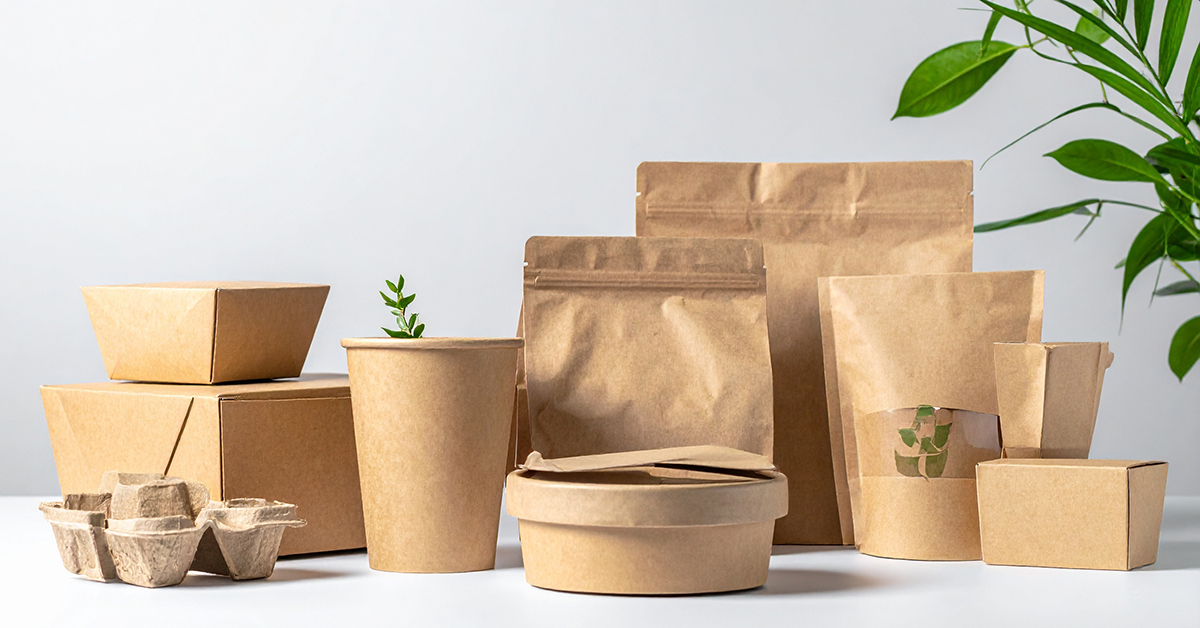
- The development and use of new/alternative packaging materials.
What should new packaging materials be tested for?
When developing or introducing a new packaging material, it’s important to know what your risks are and what parameters you might need to test in order to robustly validate your packaging.
Some key elements to consider when assessing alternative packaging materials include –
- Packaging strength:
- When looking to introduce new or changed packaging, it’s important to consider the impact of any change on the packaging function, strength and integrity (and the resultant product quality and waste impacts).
- Downgauging or changing of packaging materials (particularly from a plastic to paper/board, or moving to a mono material) can reduce the strength of the packaging, leading to damage – resulting in product contamination, shelf-life reduction and food waste.
- Pack / seals integrity:
- Packaging needs to be physically robust enough to protect the product within, not become damaged itself and retain the integrity required to be able to perform its barrier function.
- The most common issues that might cause lack of pack integrity are seal contamination, wrong sealing parameters, incompatibility of the materials, use of the wrong adhesive, or seals breaking during processing or handling of the product.
- Pre-emptively testing seals to make sure they were designed and manufactured with the right criteria in the first place will prevent issues when introducing new materials.
- Barrier properties:
- Although excess of porosity in packaging material will still protect food from microorganisms, it could let too much oxygen or moisture pass through, creating quality issues (the product could go rancid, soggy, dry or lose most of its aroma).
- Testing of barrier properties will measure the rate of oxygen and moisture that pass through in a given time, temperature and humidity level, so that any issues can be understood and addressed.
- Light and light barrier properties:
- o Allowing your food or beverage product to be exposed to light may leave it vulnerable to light-induced breakdown (oxidation) of components within (including the degradation of nutrients), and other quality issues caused by light-induced reactions (including colour changes and off odours/flavours).
- Moisture/grease resistance:
- With little historical data available on new materials, it is important to gain insight into their behaviour when exposed to different environments (e.g. the moist environment of a chiller or fridge, or moisture from a product itself). For example, storage conditions can change the properties of materials and their durability.
- Similarly, exposure to moisture, grease or specific ingredients can cause breakdown.
- Compatibility (between e.g. can coatings and the product):
- Interactions between food and its packaging can lead to quality loss, contamination and material deterioration through chemical migration, physical changes or degradation of the packaging material.
- Testing can provide reassurance that the product is compatible with the coating and that sufficient coating is still present for the duration of the desired shelf-life (based on the region in which the product will be sold).
Can standard test methods be used for alternative packaging materials?
When testing packaging materials, traditional or alternative, it is important that they can be tested in a uniform/standardised manner. However, with standard test methods having been developed with traditional packaging materials in mind, it is important to ensure that test methods are applicable and suitable for robustly answering the right questions when testing alternative packaging materials.
We conducted a research project to test a range of alternative materials using current standards. The aim was to assess whether those standards (developed for traditional packaging materials, such as plastic, paper, paperboard, metal and glass) are applicable to new/alternative materials (such as bagasse, polylactic acid, cellulose, bamboo and seaweed) and how the materials perform.
A range of grease testing, barrier testing, surface properties testing, strength testing and integrity testing assessments were applied. All material types were stored and tested over multiple temperature and humidity conditions.
The work showed that the selected testing standards could be applied to the alternative materials. However, the project highlighted that the expectation of the alternative material needs to be understood in order to identify the right testing and standard to apply.
Our members can read the full R&D report (R&D 485 – Technical challenges associated with replacing and reducing single use plastics).
How we can help – testing and development support for sustainable packaging
We know that it’s important to consider how a material will perform under different circumstances, and our packaging specialists have extensive experience in packaging testing and development for all materials.
Having your food packaging assessed by us will help you understand and mitigate any potential issues with your new and alternative packaging materials. Our tests are carried out considering all external variables, such as processing conditions, product formulation and storage temperature.
In particular, we can help packaging and food manufacturers with:
- Assessing compatibility and interactions between materials and food/beverages;
- Migration testing;
- Taint assessment;
- Evaluating on-the-go functionality (e.g. ease of handling, ability to be repeatedly washed and reheated, and capacity to keep food warm);
- Assessing grease and moisture resistance and repellence;
- Barrier testing;
- Testing strength of different materials and formats;
- Root cause analysis for pack/seal integrity issues;
- Assessing performance in different processing conditions and storage environments;
- Microbiology and packaging decontamination;
- Regulatory requirements for specific markets.
Need support validating new or changed packaging? Get in touch to discuss your requirements.
Product innovation, optimisation and lifecycle support
Supporting packaging development and validation is just part of our all-encompassing support food, drink and packaging businesses. We provide support with end-to-end product development, onward quality management and beyond.
Our unrivalled technical support for product innovation, optimisation and lifecycle helps our members and clients from ideation through to successful launch, as well as managing ongoing quality alongside future changes and risks. We bring together all the expertise you need to make the right decisions, overcome challenges and conquer your market.
No matter your challenge or stage of project, our team of technical experts can provide you with the right support, tailored to your needs.

About Lynneric Potter
Lynneric has worked at Campden BRI since 1999, and has spent the majority of this time specialising in all things packaging, including supporting members and clients, managing contract projects, and conducting research.
How can we help?
If you’d like support with developing and testing new packaging materials, get in touch.
Product innovation, optimisation and lifecycle support
End-to-end product development, onward quality management and more for your food and drink products.