
Validation of Salmonella kill steps applied to botanical products, herbs, spices and tea
30 July 2026 | Rob Limburn, Section Lead and Deputy Head of Microbiology
There are a number of industry pressures that all push food business operators towards reformulation and the use of new ingredients. But how can you ensure that your new products will be safe and successful?
When it comes to product innovation and development, the use of botanical ingredients is increasing – driven by consumer demand for natural and functional ingredients as well as distinctive flavours.
Past and more recent salmonellosis outbreaks underline a need to understand the risks associated with new herbal/botanical ingredients and the importance of applying suitable, validated kill step interventions to mitigate these risks.
Herbs, spices, tea and botanicals – their microbiological food safety
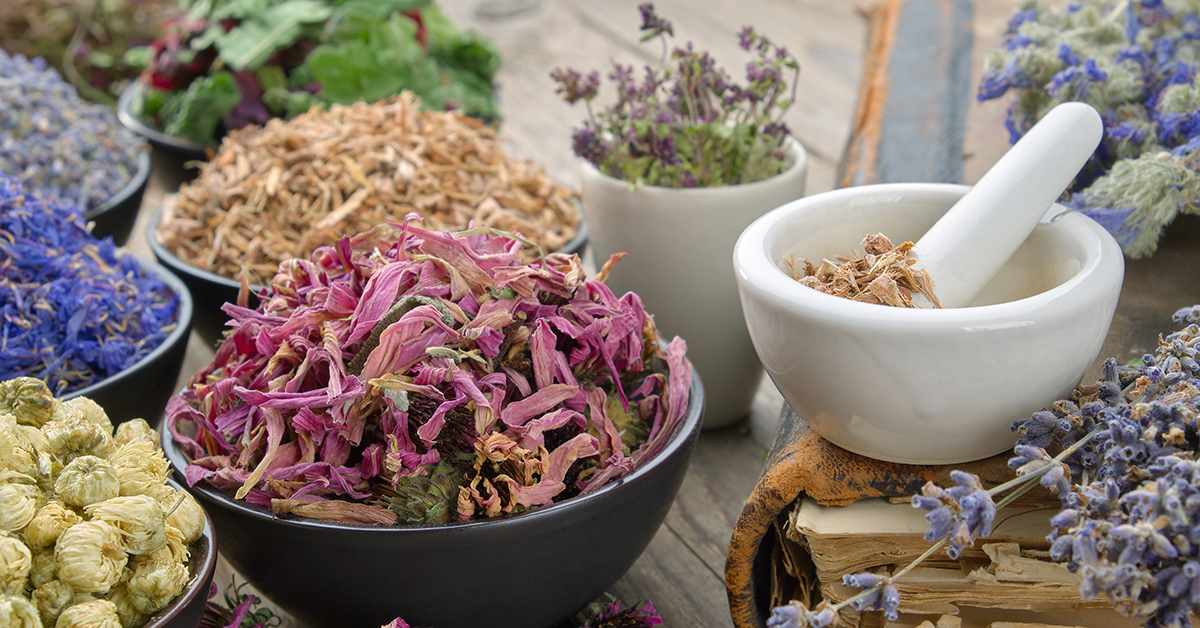
Botanicals used in the food and drink industry are extremely diverse, incorporating dried parts of fruits, seeds, bark, roots, leaves or flowers of plants and herbs. Due to the environments in which they are grown, and the practices applied during harvest, drying and transport of these ingredients, they are often prone to contamination with microorganisms, including pathogens.
In particular, these products have been associated with Salmonella contamination, and the organism has been implicated in outbreaks of foodborne disease linked with commercial products prepared with these ingredients.
Notable outbreaks of salmonellosis have been associated with herbs, spices and botanicals. These include:
- In 1993, paprika and potato crisps flavoured with paprika which was contaminated with multiple Salmonella serotypes (including Saintpaul, Rubislaw, and Javiana) caused over 1,000 cases of salmonellosis across Germany 1.
- In 2003, herbal tea (12 brands implicated) containing contaminated aniseed (Salmonella Agona) caused 39 illnesses and 21 hospitalisations in Germany. Cases were mainly infants (median age <13, range 3-20). The contamination source was traced to a 15-tonne consignment of contaminated aniseed from Turkey. Subsequent investigation revealed that the affected aniseed crop had been fertilised with manure 2.
- In 2007, herbal tea was once again implicated in an outbreak of salmonellosis, this time in Vojvodina, Serbia, leading to 14 illnesses and 4 hospitalisations. Mainly infants were infected and the outbreak was traced to a “baby” tea containing aniseed, caraway seed and fennel seed. Fennel seed contaminated with S. Senftenberg was used as an ingredient. The manufacturer confirmed that fennel seed was purchased form a third party who collected seeds from individual producers. The implicated batch had originated from an unidentified household producer 3.
- In 2010, 272 cases of salmonellosis were linked with red and black pepper contaminated with S. Montevideo which was subsequently used in the production of ready-to-eat (RTE) salami in the USA (CDC, 2010). From this, 52 people were hospitalised 4.
New ingredients, old challenges…
In 2025 and 2026 there have been multiple outbreaks of salmonellosis associated with moringa leaf extract; a product with purported health benefits which is supplied both alone and incorporated with other ingredients (e.g. in “supergreens” supplements).
In 2025 5, Salmonella Richmond infections in multiple US states were linked to consumption of 3 products containing moringa leaf powder:
- Food to Live Organic Moringa Leaf powder & Organic Supergreens powder
- Africa Imports Moringa leaf powder
- Member’s Mark Supergreens powder
There were 11 cases of salmonellosis linked to this outbreak, with 3 hospitalisations. The outbreak was traced back to a single shipment of Moringa powder from an Indian supplier.
In January 2026 6, a further outbreak of salmonellosis was associated with moringa leaf supplements, caused by strains of S. Typhimurium and S. Newport. Across 32 US states, 97 cases were reported, with 26 people hospitalised. The outbreak was declared over in March 2026. Products affected were:
- “Live It Up” Supergreen powder supplement
- “Why Not” Moringa leaf powder supplement
Live It Up brand products were also distributed to the UK, but no cases have been reported in association with these.
A second outbreak of salmonellosis associated with moringa leaf capsules started in January 2026 7. This outbreak was caused by strains of Salmonella Newport and Kentucky which were found to be resistant to all first line antibiotics. The strain was also found to possess a gene which may make it resistant multiple β-lactam antibiotics, including meropenem and other carbapenems. The outbreak was associated only with Rosabella brand moringa powder capsules sold on the company’s website and via e-commerce platforms. A total of 10 cases and 3 hospitalisations were reported across 8 US states. All cases affected an older demographic, with a median age of 70 (range 61 to 78 years).
These outbreaks underline the need to understand the risks associated with new herbal ingredients, allowing the application of suitable kill step interventions to mitigate them.
How to kill Salmonella in botanical ingredients
As with all food production, assessment of hazards and construction of a good HACCP plan is key to controlling pathogenic contamination of these ingredients. In some process flows (e.g. dried chillis), there may be potential contributors to lethality throughout the process flow, such as chemical washes of fresh fruits, drying processes and a final kill step process. In other instances, it may only be appropriate to treat the dried commodity with a kill step for Salmonella.
Some dried botanical ingredients can be extremely sensitive to traditional kill step processes applied to dry ingredients such as dry heating/roasting, due to the effect of high temperature on flavour, aroma, colour and medicinal properties.
Kill steps typically applied to these products post-drying are usually relatively mild, using steam. These are either at high temperature with very short exposure times (HTST pasteurisation) or, most commonly, at lower temperatures (generally <100°C) using vacuum steam treatment or infrared heating, which, when properly applied, can achieve effective inactivation of pathogens whilst maintaining desirable quality parameters. Various commercial systems exist which allow these processes to be applied at industrial scale.
Other effective technologies include irradiation and, in some countries, chemical treatment with fumigants such as ethylene oxide (EtO) or propylene oxide (PPO) 8. However, these treatments are considered undesirable, and the chemical treatments are currently not authorised for use in products supplied in the EU and other countries, including the UK.
UV and plasma-based technologies to decontaminate botanicals are being investigated as potential less harsh approaches to decontamination.
Validation of kill step processes applied to botanical ingredients
Due to the dynamic nature of processes applied to these products, it isn’t always possible to validate by measure of time and temperature alone.
Instead, a microbiological challenge test is recommended using a qualified surrogate organism to directly measure the level of lethality delivered to the product under realistic worst case process conditions and product characteristics, targeting a 5-log reduction in Salmonella. 8
Multiple sources of guidance on conducting challenge tests are becoming available, allowing processes to be validated based on industry best practice guidance 9, 10, 11. This type of validation is generally complex and requires a high level of technical expertise in its successful planning and execution.
The following stages are usually required:
- Categorisation of products and selection of “worst case”
- Assessment of process/system and of experimental approaches
- Qualification of surrogate organism
- Temperature distribution testing
- On-site challenge study
FREE webinar - Ingredient characterisation: Solving product quality challenges through smarter ingredient testing
This webinar will explore how ingredient characterisation can be used to support NPD, benchmarking, reformulation and specification setting.
We can help you validate your kill step processing of botanicals
We have significant expertise and experience in validation of control steps for botanical products applied within both batch and continuous systems. Our team of 12 industrial process microbiologists share a wealth of expertise in low moisture process validation and have conducted multiple validations of processes for spices, herbs and botanical ingredients for teas and health products.
We have been actively involved in industry working groups developing guidance on microbiological challenge testing (ISO 20976-2) as well as expert groups on risk assessment of low moisture products. We have also published multiple R&D reports on low moisture process validation (Archer at al, 1997; Archer, 1997; Archer at al, 1998; Limburn and Gaze, 2013; Potter at al, 2017).
We can support you in the validation of your kill step processes for botanicals via the following services:
- Our microbiological challenge testing services can be applied at your site, anywhere in the world.
- Process validations for batch systems or continuous, high-throughput systems.
- Surrogate qualification studies – comparison of inactivation kinetics for relevant Salmonella strains and surrogate organisms.
- Temperature distribution and heat penetration studies.
- Consultation and troubleshooting assistance.
All trials are planned and executed by our experienced specialists, based on international best practices in challenge testing 8,9,10,11. Each validation study is accompanied by a full report which details the rationale, methodology, full results and interpretation/conclusions.
Our depth of experience in low moisture process validation allows us to be flexible in our approaches, ensuring that the validation study design is optimised for the specific product and process equipment under assessment.
Product innovation, optimisation and lifecycle support
Ensuring safe, successful and cost-effective new products can be challenging. As can ensuring product quality throughout shelf-life and consistent success throughout ongoing production.
We have expertise in all these areas and bring them together to help you make the right decisions, overcome challenges and conquer your market.
We are here to help with every step of the process – from ideation through to successful launch, as well as managing onward quality alongside future changes and risks. Find out more about the support we offer in end-to-end product development, onward quality management and more.
No matter our client challenge or stage of project, we consistently deliver innovative solutions, helping clients to optimise their new and existing products, putting them in a better position to conquer their market with safe, successful products.

About Rob Limburn
Rob has worked in Microbiology here within both Methods Research and Industrial Process Microbiology. He has been working in the food industry since 2004 and also has experience in allergens testing and authenticity testing.
How can we help?
If you’d like support with validation of Salmonella kill steps applied to botanical products, get in touch
Product innovation, optimisation and lifecycle support
End-to-end product development, onward quality management and more for your food and drink products.
References
- Lehmacher, A., Bockemühl, J. and Aleksic, S. (1995) Nationwide outbreak of human salmonellosis in Germany due to contaminated paprika and paprika-powdered potato chips. Epidemiology and Infection 115, pp501-511
- Koch, J. Schrauder, A., Alpers, K, Werber, D., Frank, C, Prager, R., Rabsch. W., Broll, S., Feil, F., Roggentin, P, Bockemühl, J., Tschӓpe, H., Ammon, A., Stark, K. (2005) Salmonella Agona Outbreak from Contaminated Aniseed, Germany. Emerging Infectious Diseases, 11(7), pp1124-1127 https://doi.org/10.3201/eid1107.041022
- Ilić, S., Durić, P. and Grego, E. (2010) Salmonella Senftenberg infections and fennel seed tea, Serbia. Emerging Infectious Diseases 16(5), pp893-895
- Salmonella Montevideo Infections Associated with Salami Products Made with Contaminated Imported Black and Red Pepper --- United States, July 2009--April 2010
- Salmonella Outbreak Linked to Moringa Leaf Powder | Salmonella Infection | CDC
- Outbreak Investigation of Salmonella: Moringa Leaf Powder (January 2026) | FDA
- Extensively Drug-Resistant Salmonella Outbreak Linked to Moringa Powder Capsules | Salmonella Infection | CDC
- American Spice Trade Association, ASTA. (2017) Clean, safe spices: Guidance form the American Spice Trade Association 57815
- ISO 20976-2:2022 - Microbiology of the food chain — Requirements and guidelines for conducting challenge tests of food and feed products — Part 2: Challenge tests to study inactivation potential and kinetic parameters
- Alliance for Innovation & Operational Excellence, AIOE (2012) Validating the reduction of Salmonella and other pathogens in heat processed low-moisture foods 224455.pdf
- National Advisory Committee for Microbiological Criteria in Foods, NACMCF Parameters for Determining Inoculated Pack/Challenge Study Protocols.