

Shelf-life misconceptions: Five myths food manufacturers should stop believing
30 July 2026 | David Whittaker, Process Innovation Lead
The topic of shelf-life is a broad one and often raises tricky questions. Namely, how long should a product’s shelf-life be? What should I do to verify shelf-life? Can we increase a product’s shelf-life?
Manufacturers often struggle to answer these questions effectively as so many different factors can be limiting to the shelf-life of a product and understanding these factors requires knowledge in multiple different areas.
We receive many enquiries every day around shelf-life and are presented with many misconceptions! This blog intends to bust a few myths and give some general guidance along the way.
Myth number 1: My product will always need micro testing to verify shelf-life.
The first question one should ask when exploring the shelf-life of a product is “is it microbiologically stable?”. If the product is ambient, for example a canned food, many beverages, or a condiment in a jar, then the answer to that should be yes. Packaged, ambient stable foods should be microbiologically stable and if they are not, then we have a problem!*
Ambient stable packaged foods and drinks are formulated and processed (typically with heat) to ensure microbiological stability, i.e. no viable microorganisms present. Shelf-life therefore is a function of other, quality-related, factors. Quality can mean many things – it could be physical stability (for example, in an emulsified condiment like mayonnaise), flavour and aroma (for example, in a canned beverage), or nutritional content.
Determining shelf-life is not simply about identifying how a product changes over time, but also about defining what level of change is acceptable. Quality limits should be based on product specifications, consumer expectations and the intended use of the product. In many cases, a product may remain safe to consume but no longer meet the quality standards expected by either the manufacturer or the consumer.
Another example is frozen foods, where a product that would typically be perishable is stored under temperature conditions preventing microbiological growth. In this case, quality parameters would also be the focus.
Myth 1 busted: Micro testing is not needed to verify shelf-life for many products!
* So how is a product shelf/micro stable? For many ambient products in this category, microbiological stability and safety should be prioritised before exploring shelf-life. This should be done through kill steps (e.g. heat processing) and/or formulation control (e.g. pH control), with the implementation of suitable prerequisite programmes (sanitation, packaging, hygienic design etc). Final product incubation, or micro testing, is often used to verify shelf stability and safety.
Myth number 2: If microorganisms can grow in a product, then surely it is their growth that is the limiting factor for shelf-life?
If a product is microbiologically unstable or, in other words, perishable, then the next question becomes, “is microbiological growth the limiting factor to its shelf-life?”.
There are products where growth is viable, but only to a limited extent and at a relatively slow rate. For these products the shelf-life could be limited by a different, quality related factor.
An example of this could be baked goods, like bread. Due to low water activity, bacterial growth is typically not possible, but these products are susceptible to mould growth. However, when exposed to the environment, quality changes like staling, or oxidation effects, could reduce the product quality more quickly than mould growth. The key point to understand, therefore, is which would happen first (and how quickly it is likely to happen), as well as understanding the point at which the change becomes unacceptable.
A similar example would be a longer life processed chilled product. Although some micro growth will be viable, the product might chemically spoil due to enzymatic changes, or oxidation, before micro levels reach an unacceptable level.
Myth 2 busted: Microbial growth won’t always be the shelf-life limiting factor even when growth is viable. The limiting factor might still be organoleptic changes. The key point is which happens first.
Myth number 3: Shelf-life is always separate to food safety and therefore won’t require validation.
In the examples above, product shelf-life is a consideration relating more to organoleptic quality and/or non-pathogenic microorganism growth. For some product categories, however, shelf-life is intrinsically linked to food safety. We may often refer to these products as perishable, or food that is likely to “go off” (i.e. foods that may become unsafe to eat beyond their ‘use by’ date).
These are often chilled products where the shelf-life is very much limited by the growth of pathogenic microorganisms. Typically, products like these are often un-processed (e.g. raw fish in a sealed tray, or a pack of sausages) or un-packaged (e.g. deli counter cooked meats) but can also be sealed in packs with processing kill steps (e.g. ready-to-eat products such as sandwich meat, prepared meals or fresh milk).
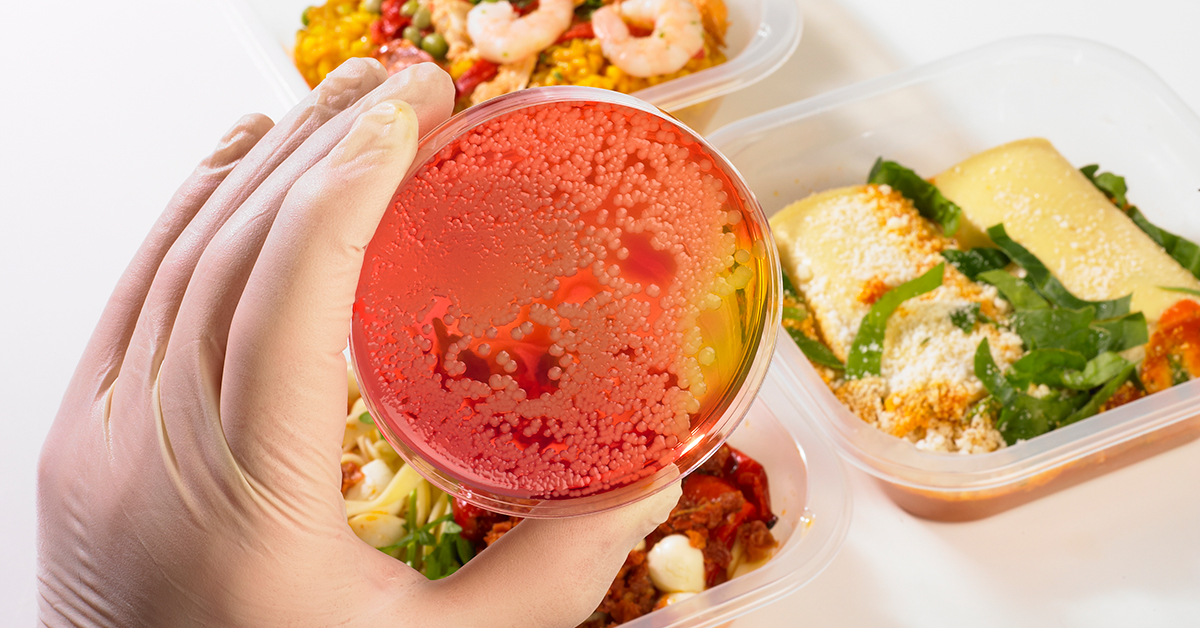
As the shelf-life for such products is limited by microbial growth, assigning the correct shelf-life is critical from both a quality/spoilage perspective and a food safety perspective. Getting shelf-life wrong can have serious implications and shelf-life validation will likely need to involve extensive microbiological testing over life, including stressing of the storage conditions. The success criteria will depend on the product, for example ready-to-cook products would have more lenient microbiological criteria compared to ready-eat-products.
Myth 3 busted: For many products the shelf-life (use-by date) is essentially a food safety control preventing the consumption of food products beyond the point they are deemed safe. Products therefore require a robust microbiological validation to ensure a safe shelf-life.
Myth number 4: Shelf-life testing costs thousands!
It could cost thousands, but it could also be much cheaper. It really depends on what the limiting factor is, and how serious the implications are of getting it wrong.
For microbiologically stable products, where a product’s shelf-life is limited by its quality retention over time, the testing required (and hence the cost) can be quite routine. It may simply be organoleptic assessment in real time, looking for key issues such as colour change, phase separation, flavour taints or rancidity at specific time points. Organoleptic assessment is often supported with simple chemical or physical stability indicators such as pH tests or creaming index. A manufacturer may also choose to do a more formal sensory assessment using a trained sensory panel, or use more sophisticated analytical measurement techniques, at time points over shelf-life.
Microbiological testing for perishable products can be more involved, but it is important to ensure the test suite is appropriate for the product in question, depending on, for example, if the product is ready to eat, heat or cook, or on a microorganism’s viability in the product. It often pays to speak to expert microbiologists before committing to costly microbiological testing over shelf-life, particularly for longer life chilled products that require multiple timepoints.
Myth 4 busted: Shelf-life testing varies hugely, depending, more than anything, on what the product category is. The level of investment in shelf-life testing should correlate to the risks and costs of getting it wrong. It pays to discuss with specialists and ensure testing is appropriate for the product and proportionate to the risks.
Myth number 5: Accelerated shelf-life testing is always the perfect solution.
We get many enquiries about accelerated shelf-life testing. It makes sense. Real-time shelf-life testing is time-consuming (especially for longer life products). Whilst it can be useful in many contexts often accelerated testing cannot be a substitute for real-time testing and shouldn’t be relied upon if the outcome relates to food safety.
Accelerated shelf-life testing relating to microbiological growth is a particularly debated topic. One could argue that if a product is perishable, the shelf-life is short enough and critical enough to make real-time testing both practical and essential. If the product has a long ambient shelf-life, then it makes sense to focus efforts on ensuring microbiological stability in the first place, through validation activities (validation of heat process, or pH control) and verification activities such as finished product sampling/testing.
Accelerated shelf-life testing related to sensory/quality attributes of a product can be more meaningful, but there is always a question of accuracy and there will typically be a certain level of approximation. The question becomes more about the risks of basing a shelf-life on an approximation.
Myth 5 busted: Accelerated shelf-life testing is a complex challenge, and it requires specific knowledge to set the storage conditions in a way that they will mimic the product deterioration at a rate that can be correlated to the real-time shelf-life. Accelerated shelf-life testing is a very useful tool, but with a degree of approximation, and the benefits of basing a shelf-life on this should be weighted up against the risks of getting it wrong.
Download the complete Maximising Shelf-life eBook, for free, to unlock the tools for measuring and maximising the shelf-life of your food and drink products whilst ensuring their safety and quality.
Your partner for designing, validating and troubleshooting food and drink shelf-life
Shelf-life is highly specific to each product category. Its length, storage conditions, the consequences of getting it wrong, limiting factors, and the testing needed to establish and verify it all vary significantly. For example, the considerations for a cereal bar will be very different from those for long-life milk.
This is why it pays to consult with us, speak to our experts and understand the right steps to establish shelf-life for a new product, verify or validate shelf-life, or look to optimise.
Our specialists work together to provide integrated solutions – helping you understand what limits shelf-life, generate the right evidence, and make confident decisions across product innovation, microbiology, chemistry, sensory, quality, processing, packaging, and regulatory considerations.
With all the expertise and practical support you need under one roof, we can help with:
- Shelf-life guidance / consultancy
- Shelf-life design in new product development
- Trials to verify / validate shelf-life
- Accelerated shelf-life testing
- Shelf-life extension
- Troubleshooting/investigation of shelf-life failures
Whether you are developing/launching a new product, extending shelf-life for an existing product or investigating a failure, we provide the technical depth and practical insight needed to move forward with confidence.

About David Whittaker
David is a thermal and non-thermal processing specialist and has expertise across many food and beverage sectors.
David also delivers many thermal processing training courses and has a real passion for communication in this area, having spoken at several conferences and seminars on the topic, as well as contributing to Campden BRI guidelines.
How can we help?
For any questions or to arrange shelf-life support, get in touch.
More on shelf life
Your one-stop shop for food and drink shelf-life: From product development and validation to troubleshooting and extension.