

Safe shelf-life: Understanding and testing microbiological shelf-life of food and drink products
24 August 2026 | Linda Everis, Microbiology Safety and Spoilage Section Lead
Assigning the correct shelf-life can be the key to the commercial success of food and drink products and should be done in the early stages of new product development. Any subsequent changes to formulation, packaging, manufacturing, distribution and storage should trigger a review of the shelf-life, as all these factors play a part and can also impact each other.
This blog looks at microbiological shelf-life, the factors that influence it, and approaches to establishing microbiological shelf-life.
Microbial growth is not the only factor that can limit a product’s shelf-life. It is also necessary to consider the sensory and other quality parameters of the product to ensure they will remain satisfactory within the product life.
There are two aspects to microbiological shelf-life. These relate to safety (pathogens and their toxins) and quality (spoilage microorganisms). The potential for food poisoning microorganisms (pathogens) to be present and their ability to grow and produce toxins over life needs to be the primary concern. Once this is established, the potential for spoilage organisms to grow and affect product quality can then be considered.
Factors affecting microbiological shelf-life
Microbiological shelf-life is influenced by many aspects of a product’s formulation and how it is manufactured.
Factors affecting food/drink microbiological shelf-life include:
- Raw material quality;
- Heat process / ‘kill step’, where applicable;
- Product formulation – pH (acidity), water activity, preservatives;
- Packaging, including gas atmosphere;
- Temperature and storage conditions (commercial production, distribution, warehousing, retail storage / sale, consumer handling);
- Environmental hygiene of the production area.
Measuring microbiological shelf-life
Understanding the factors that support and limit shelf-life length is one thing – but how do you assign a shelf-life that you know, from a microbiological perspective, will keep consumers safe?
There are four common approaches that can be used to determine the life of a product with respect to its microbiology.
These may be used singly or in combination by manufacturers to give an accurate view of product life. The approaches are:
- Predictive microbiology: The computer simulation of the growth of microorganisms in food and beverage products. This is most commonly used to assess the potential for growth of pathogens such as Listeria monocytogenes.
- Use of historical data: Many companies hold a large amount of historical microbiological testing data on the products that they produce. If a new product has very similar constituents, processing conditions, packaging and storage conditions to an existing product, then it may be that the shelf-life will be similar.
- Microbiological quality shelf-life testing: This is where the shelf-life of a product is established with regards to naturally occurring microorganisms. These are organisms that are likely to be present in every batch and if present are likely to grow.
- Challenge testing: This is where the growth of pathogens or spoilage organisms is assessed via the deliberate inoculation (contaminating the product with a known level of a particular microorganism) of your product with relevant microorganism(s) and then monitoring the levels of those microorganism(s) over the intended shelf-life. It is a laboratory simulation of what can happen to a food or beverage product, during distribution and subsequent handling, if it were to be contaminated with a microorganism.
FREE webinar - Shelf-life confidence Webinar: Design it, prove it, improve it
This webinar, we will explore the full cycle of the shelf-life management system. We will share insights to help you design products to achieve the right shelf-life, validate it with data, and diagnose and fix failures when they occur.

The methods selected depend on the level of risk of growth of pathogens and spoilage organisms in the product, which can be determined through a HACCP study or microbiological risk assessment. Whichever approach(es) are used, it is recommended that the product is assessed throughout (and beyond) its intended shelf-life to determine and validate what shelf-life should be allocated.
Your partner for designing, validating and troubleshooting food and drink shelf-life
Considerable expertise and experience are needed to guarantee that all necessary considerations are included in the setting or extension of a product’s shelf-life, to ensure product safety, quality and legal compliance. All food and beverage products need to be considered on an individual basis.
With all the expertise and practical support you need under one roof, we can help you design, validate and maximise shelf-life with confidence.
Download the complete Maximising Shelf-life eBook, for free, to unlock the tools for measuring and maximising the shelf-life of your food and drink products whilst ensuring their safety and quality.
Our specialists work together to provide integrated solutions – helping you understand what limits shelf-life, generate the right evidence, and make confident decisions across product innovation, microbiology, chemistry, sensory, quality, processing, packaging, and regulatory considerations.
Whether you are developing/launching a new product, extending shelf-life for an existing product or investigating a failure, we provide the technical depth and practical insight needed to move forward with confidence.
For more on shelf-life, sign up to our FREE shelf-life webinar on 14 October.
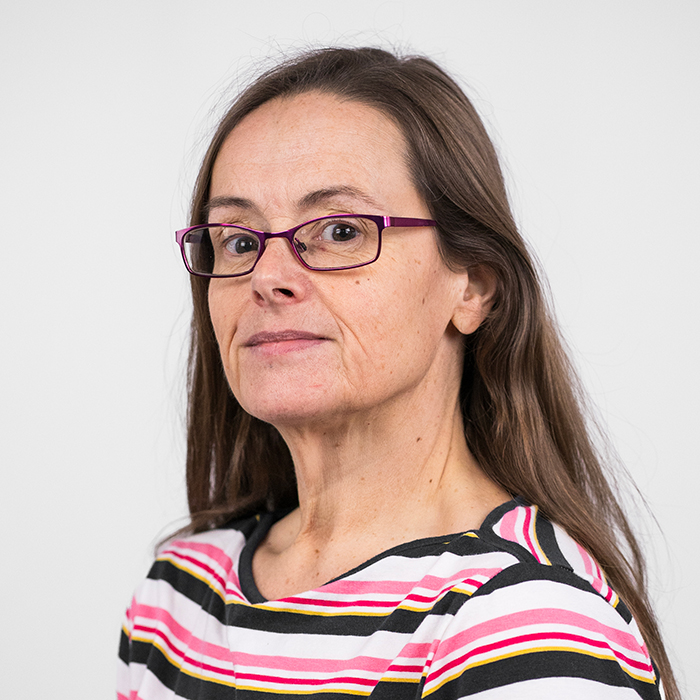
About Linda Everis
Linda has a wealth of knowledge, experience and expertise from her time in Microbiological Analytical Services and Microbiology Safety and Spoilage. She joined Campden BRI in 1995 as a Senior Technician in the Microbiological Analytical Services group having graduated from the University of Wales Aberystwyth with a BSc in Biology.
Alongside the expert support that Linda provides to our members and clients, Linda conducts project work and research, and has been author and co-author of articles and papers for a variety of microbiological publications and Campden BRI reports.
Linda also lectures on shelf-life, challenge testing and predictive microbiology for our many training courses and seminars.
How can we help?
If you’d like support with microbiology and safe shelf-life, get in touch.
Design, validate and maximise shelf-life
Your one-stop shop for food and drink shelf-life: From product development and validation to troubleshooting and extension.