
Open shelf-life: Why validation matters for food and drink products
2 October 2026 | Linda Everis, Microbiology Safety and Spoilage Section Lead
Setting the right shelf-life for a food or drink product is essential for protecting consumer safety, maintaining product quality and protecting brands. For multi-use products, manufacturers also need to consider ‘open shelf-life’ (how long the product remains safe and acceptable once the pack has been opened).
When assigning a ‘best before’ or ‘use by’ date in the UK and EU, any storage conditions or instructions for use that the shelf-life relies on should also be included on pack (mandatory for a ‘use by’ date and if need be for a ‘best before’ date). This may include guidance after opening, such as ‘once opened, keep refrigerated and use within 2 days’.
As with the original shelf-life, this open shelf-life often needs to be validated or verified using appropriate evidence.
In this blog, we look at what open shelf-life means, the factors that influence it, and how validating open shelf-life through testing can help food and drink manufacturers assign safe, evidence-based shelf-life with confidence.
What is open shelf-life?
The shelf-life of a product is the time after production during which it remains acceptable for consumption. The end of the shelf-life is, therefore, the point at which it becomes unacceptable. The practice of setting an unopen shelf-life is widely documented and carried out within the food industry.
However, where the product has been designed for repeat use by the consumer, there will be a secondary shelf-life associated with the products – often termed ‘open shelf-life’.
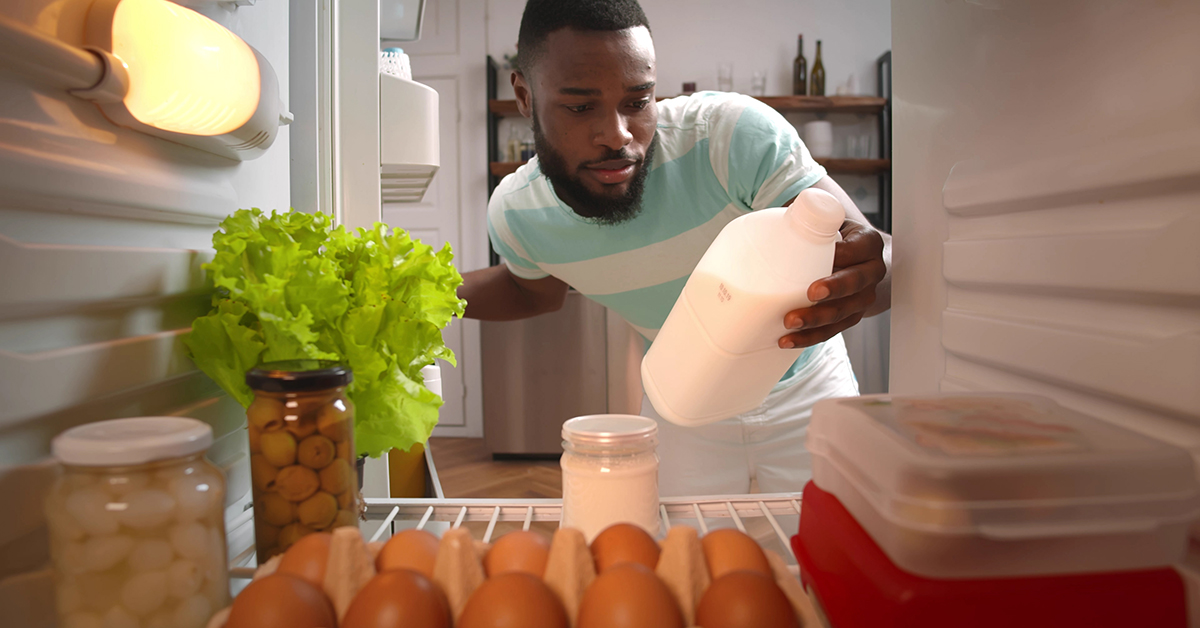
Open shelf-life is the period after opening during which a product remains safe and acceptable to consume, provided it is stored and handled according to the instructions on pack. It will undoubtedly be shorter than the unopened shelf-life because opening the pack can change the atmosphere around the product, introduce oxygen, allow moisture loss or uptake, and create opportunities for contamination during use.
Factors influencing ‘open life’ of food and drink
The shelf-life of a product changes once it has been opened. We study its ‘open life’ to determine how long a product will remain acceptable for consumption.
Factors influencing open life include:
- The microorganisms present in the local environment, such as in a fridge;
- Product formulation (pH, water activity, preservative system);
- Storage temperature (including periods outside of the recommended, e.g. outside of fridge);
- Product handling after opening (e.g. repeated opening, portion removal, contact with utensils.
This can, in some cases, be quite complex. For example, meats packed in a modified atmosphere may have a much shorter life once opened. While the pack remains sealed, the modified atmosphere can inhibit some aerobic microorganisms. Once opened, oxygen is introduced and aerobic spoilage organisms may grow more readily.
Also, there is the potential for the consumer to contaminate products once opened which would affect the assigned shelf-life.
FREE webinar - Shelf-life confidence Webinar: Design it, prove it, improve it
This webinar, we will explore the full cycle of the shelf-life management system. We will share insights to help you design products to achieve the right shelf-life, validate it with data, and diagnose and fix failures when they occur.

When should open shelf-life be validated?
Open shelf-life should be considered whenever a product is intended to be consumed over more than one occasion, or where instructions such as “once opened, keep refrigerated and consume within X days” are used.
Validation may be particularly important when launching a new product, changing a recipe, altering packaging, extending shelf-life, changing processing conditions or investigating spoilage complaints.
Measuring open shelf-life
It’s important that any open shelf-life testing mimics as closely as possible the handling that the product will encounter once opened, i.e. realistic product use.
This could include opening the pack, removing a portion and storing the remaining product under the recommended conditions for the remainder of life; or removing portions for testing at the time-points that mimic consumer use (e.g. removing a portion daily).
Depending on the product and risk profile, testing may include enumeration of spoilage organisms, hygiene indicators, relevant pathogens, pH, water activity and sensory quality. In some cases, challenge testing may be appropriate to understand whether specific microorganisms could grow under the proposed conditions.
Setting an open shelf-life
Evidence to support open shelf-life decisions may include:
- Microbiological shelf-life studies;
- Challenge tests;
- Storage trials
- Sensory assessment (where safe and applicable);
- Historical data;
- Formulation data, processing information, packaging details;
- Complaint trends.
The type and depth of evidence needed will depend on the product, its intended use, the hazards of concern and the proposed storage instructions.
Download the complete Maximising Shelf-life eBook, for free, to unlock the tools for measuring and maximising the shelf-life of your food and drink products whilst ensuring their safety and quality.
Your partner for designing, validating and troubleshooting food and drink shelf-life
For both the full shelf-life and the ‘open’ shelf-life once the packaging has been opened, we can help back up shelf-lives with required data to ensure food and beverage products have a long life but always remain safe to consume. With all the expertise and practical support you need under one roof, we can help you design, validate and maximise shelf-life with confidence.
Our specialists work together to provide integrated solutions – helping you understand what limits shelf-life, generate the right evidence, and make confident decisions across product innovation, microbiology, chemistry, sensory, quality, processing, packaging, and regulatory considerations.
Whether you are developing/launching a new product, extending shelf-life for an existing product or investigating a failure, we provide the technical depth and practical insight needed to move forward with confidence.
For more on shelf-life, you can join our FREE webinar on 14 October – “Shelf-life confidence: Design it, prove it, improve it”.

About Linda Everis
Linda has a wealth of knowledge, experience and expertise from her time in Microbiological Analytical Services and Microbiology Safety and Spoilage. She joined Campden BRI in 1995 as a Senior Technician in the Microbiological Analytical Services group having graduated from the University of Wales Aberystwyth with a BSc in Biology.
Alongside the expert support that Linda provides to our members and clients, Linda conducts project work and research, and has been author and co-author of articles and papers for a variety of microbiological publications and Campden BRI reports.
Linda also lectures on shelf-life, challenge testing and predictive microbiology for our many training courses and seminars.
How can we help?
For support designing, validating or troubleshooting a quality shelf-life study, get in touch.
Design, validate and maximise shelf-life
Your one-stop shop for food and drink shelf-life: From product development and validation to troubleshooting and extension.