
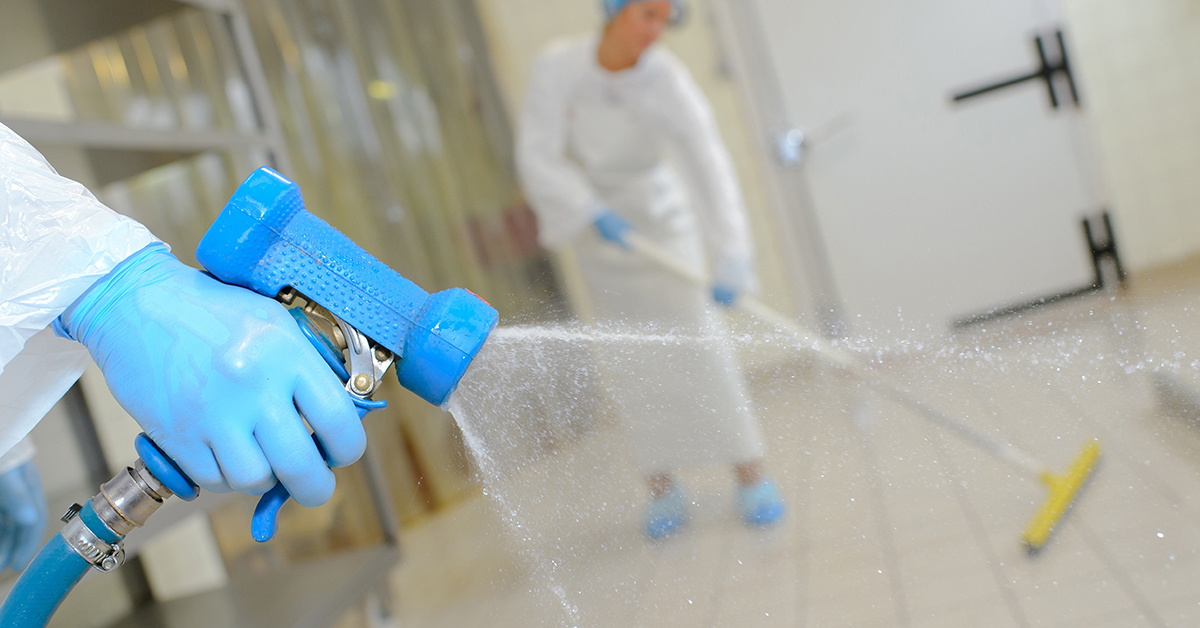
Allergen cleaning: Why strong PRPs make the difference
9 July 2026 | Wendy Duncan, Safety, Quality and Allergens Manager
Food allergen control is often discussed in terms of testing, labelling and cleaning schedules. But, in a busy food factory, the real challenge is making sure allergen residues do not move unintentionally from one product, process or area to another.
Cleaning plays a vital role, particularly where equipment is shared between products with different allergen profiles. However, cleaning alone is not enough.
Allergen cleaning must sit within a wider system of well-managed prerequisite programmes
To be effective, allergen cleaning must sit within a wider system of well-managed prerequisite programmes (PRPs) that support hygienic production, reduce cross-contact risks and help ensure controls work consistently.
Why allergen cleaning matters
In many factories, production lines handle multiple products. One run may contain milk, egg, wheat, nuts or soya, while the next may not contain the same allergens. If residues remain on belts, utensils, pipework, hoppers or hard-to-reach areas, there is a risk of allergen carry-over into a product where that allergen is not intended to be present.
This is why cleaning procedures need to be about more than achieving visually acceptable. A surface can look clean but still retain protein residues. Cleaning validation provides evidence that a defined cleaning process is capable of removing allergen residues to an acceptable level. Routine verification and monitoring then help confirm that the validated process continues to be followed and remains effective in day-to-day production.
Five key considerations for effective allergen cleaning
1. Understand where allergens are used
The starting point here is allergen mapping. This means identifying which allergens are present on site, where they enter the process, how they are stored, how they move through production and where they may come into contact with shared equipment or personnel routes.
2. Assess the real risk of cross-contact
Not every allergen risk is controlled by cleaning. Some risks may relate to raw material handling, incorrect labelling, rework, storage practices or poor segregation. A documented risk assessment helps identify where cleaning is the appropriate control and where supporting PRPs are needed.
3. Challenge the cleaning process
Validation should focus on the most challenging scenarios (worst case), such as the highest-risk allergen, the most difficult-to-remove product residue, the least accessible areas or equipment that is harder to clean. Powders, sticky products, textured surfaces and rubber seals may present greater challenges than easier products and smooth stainless steel.
4. Select the right tests
Testing should be suitable for the allergen, the product matrix, the type of sample collected and the production process. Product samples, swabs, rinse waters or purge materials may all be relevant depending on the process. Quantitative methods such as ELISA can provide useful evidence, but the method selected must be appropriate for the specific allergen and product conditions. Find more examples here.
5. Keep records and training up to date
Validation reports, sampling plans, corrective actions, test results, staff training records and change-control decision logs all form part of due diligence. If a product, process, raw material, line layout or cleaning method changes, the cleaning validation should be reviewed and may need to be revalidated.
Where PRPs fit in
PRPs provide the foundation that allows allergen cleaning to work properly. Under ISO/TS 22002-1, PRPs cover areas such as building layout, zoning, cleaning and sanitation, utilities, pest control, personnel hygiene, supplier management, waste control and maintenance. These programmes help prevent hazards from becoming embedded in the production environment.
For allergen control, strong PRPs may include:
- Segregated storage for allergenic ingredients
- Clear production scheduling to reduce changeover risk
- Hygienic equipment design and access for cleaning
- Controlled movement of people, tools and utensils
- Effective rework controls
- Documented cleaning instructions
- Staff competency and refresher training
- Supplier assurance for allergen information
If these basics are weak, even a technically sound cleaning validation may not be enough.
For example, validated cleaning will not compensate for poor ingredient segregation, unclear line clearance procedures or staff who have not been trained to recognise and manage allergen cross-contact risks.
FREE webinar - Allergen controls: Are your PRPs actually protecting you and are you ready for future changes?
This webinar will explore why allergen control should be viewed as an outcome of an effective food safety management system, rather than a standalone activity.

A robust, effective, risk-based approach
Effective allergen cleaning is not simply about applying detergent and signing off a checklist. It requires a risk-based approach, robust validation, suitable testing and routine verification. Most importantly, it depends on strong PRPs that control the wider factory environment and support consistent day-to-day practice.
When cleaning validation and PRPs work together, manufacturers are better placed to protect consumers, support accurate labelling decisions and demonstrate a robust approach to allergen management during audits and investigations.
Helping you strengthen PRPs and allergen cleaning
We provide tailored, expert support across all aspects of food allergen management, helping food and drink businesses control risk with confidence – from supply chain to finished product.
Download our FREE Managing Food Allergens eBook today! Secure food safety, control and confidence through effective allergen management
We can support food businesses with allergen risk assessments, PRP reviews, cleaning validation planning, sampling strategies, analysis, interpretation of analytical results, training and practical improvement programmes. Whether you are reviewing existing controls or developing a new allergen management approach, we can help ensure your system is scientifically sound, practical and audit-ready.
Strong PRPs don’t just support cleaning – they strengthen allergen control from the ground up. Join our FREE webinar on 10 September - “Allergen Controls: Are your PRPs actually protecting you and are you ready for future changes?”.

About Wendy Duncan
Wendy has over 25 years’ experience in the food manufacturing industry within the FMCG sector across the UK and Europe. Her career spans R&D, technical and nutrition roles, leading innovation and renovation projects across a wide range of categories including savoury and snacking, dressings, spreads, tea, plant-based products and ice cream.
She specialises in food allergen management and food safety systems. As allergen lead within the Campden BRI Food Safety Management Systems team, Wendy delivers training and consultancy to support clients in managing allergen risk and ensuring compliance.
How can we help?
If you’d like help to strengthen your PRPs and allergen cleaning, get in touch.
Join our FREE webinar
Allergen controls: Are your PRPs actually protecting you and are you ready for future changes?