


Allergen incidents: You’re monitoring everything, so why are failures happening?
2 September 2026 | Katie Carter – Safety, Quality and Food Allergens Specialist
In modern food manufacturing, it can often seem as though every aspect of allergen management is under constant scrutiny – from supplier assurance and cleaning verification, to label checks and changeover controls. Data is meticulously recorded, records are reviewed and signed, and dashboards are filled with performance metrics. Yet despite this extensive monitoring and documentation, allergen-related incidents and product recalls continue to occur.
With so much being measured, why do failures still occur?
The answer often lies in the misunderstanding and misapplication of monitoring and verification activities within prerequisite programmes (PRPs). In this blog, we explore why failures persist and how to strengthen allergen management systems.
Monitoring is not the same as control
Monitoring is real-time checking that a process step is being performed as intended. In allergen management, this may include:
- Ingredient checks at intake or staging;
- Line clearance checks before production;
- Label verification at start-up and during runs;
- Cleaning checks.
These activities answer the question “Is the task being done correctly now?”. However, monitoring is often procedural and repetitive, which introduces risks such as:
- Operators may “box-tick” rather than critically assess;
- Checks can become routine, reducing vigilance;
- Errors may pass undetected if the method is weak.
For example:
A line start-up check might be completed and recorded, yet trace allergens remain due to ineffective cleaning or poor inspection technique.
Verification: The missing link
Verification (which, unlike monitoring, asks “Has our system actually been working as intended?”) is often where systems fall short.
For allergen prerequisite programmes, effective verification should include:
- Allergen cleaning programme review;
- Allergen testing results;
- Internal audits focused on allergen controls;
- Review of deviations, near misses, and complaints;
- Trend analysis of allergen related monitoring data;
- Observation of practices (not just record checks).
Without strong verification, businesses rely on assumptions such as “We’ve never had an issue, so the system must be working”, which is a dangerous mindset, especially with allergens, where a single failure can have severe consequences.
Why failures still happen
Even in well-documented systems, allergen failures occur due to:
- Over-reliance on paperwork: Records show compliance, but not necessarily reality.
- Weak validation of controls: Cleaning or segregation processes may not actually remove or control allergens effectively.
- Human factors: Fatigue, time pressure, complacency or lack of understanding can result in things being missed.
- Poor verification design: Verification activities may exist but lack depth or relevance (e.g. auditing paperwork instead of practices).
- Inadequate escalation: Repeated minor deviations not being acted on before they lead to major incidents.
FREE webinar - Allergen controls: Are your PRPs actually protecting you and are you ready for future changes?
This webinar will explore why allergen control should be viewed as an outcome of an effective food safety management system, rather than a standalone activity.

The hidden weakness: Ineffective PRPs
Allergen control commonly sits within prerequisite programmes, including:
- Supplier management;
- Storage and segregation;
- Production scheduling;
- Label control;
- Cleaning.
Preventing allergen failures starts in your PRPs, so they need to consistently work under pressure to protect you. Failures occur when PRPs are assumed to be effective but are not truly validated or challenged. Typical gaps include:
- Cleaning methods not being validated for allergen removal;
- Shared equipment used without robust risk assessment;
- Cross-contact risks underestimated during changeovers;
- Label control systems relying heavily on human diligence.
In these cases, monitoring simply confirms that a flawed process is being followed, not that it is effective.
Strengthening allergen PRPs: A practical approach
To close the gap between monitoring and actual control, food businesses should focus on three critical areas:
- Validate before you monitor – Ensure PRPs are scientifically and practically sound:
- Validate cleaning with allergen-specific methods, not just ATP
- Assess cross-contact risk based on real product behaviour
- Challenge assumptions in production design and flow
- Make monitoring meaningful – Improve the quality of monitoring:
- Train staff to understand why, not just how
- Rotate monitoring responsibilities to reduce complacency
- Use visual standards and real examples of failures
- Strengthen verification rigor – Shift from passive to active verification:
- Introduce routine allergen swabbing programmes
- Conduct unannounced, observation-based audits
- Analyse trends in errors and near misses
- Link verification results directly to improvement actions
Changing the mindset
The aim is not to introduce more monitoring activities; it is to ensure that controls are genuinely effective and risks are being actively managed.
If allergen failures are still happening despite extensive monitoring, it is not a failure of effort; it is a failure of system design and assurance.
Food businesses can strengthen allergen control by validating that their PRPs work in practice, making monitoring meaningful, and using active verification to confirm that allergen risks are being effectively managed.
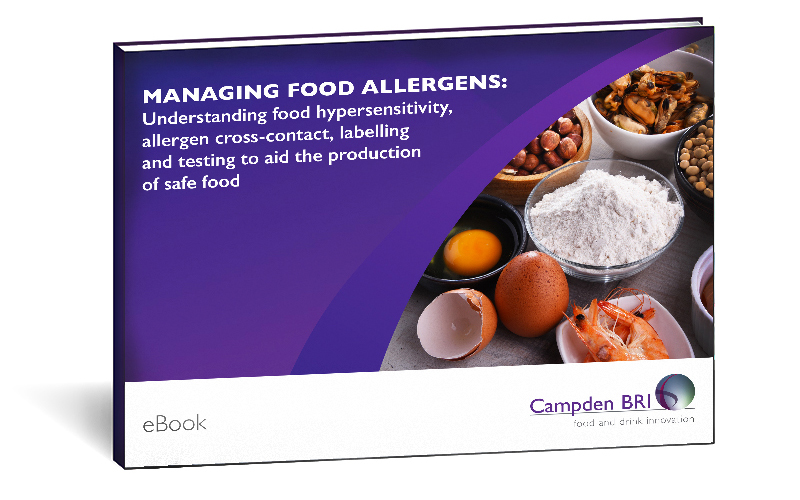
Download our FREE Managing Food Allergens eBook today! Secure food safety, control and confidence through effective allergen management
We can help you control your allergen risks
We provide tailored, expert support across all aspects of food allergen management, helping food and drink businesses control risk with confidence – from supply chain to finished product.
No matter where your business is on its food allergen management journey, we can help you control allergen risk with confidence. By working with us, your business can benefit from:
- Specialist allergen and food safety expertise;
- Practical, proportionate, risk-based advice;
- Support aligned with regulatory expectations and best practice;
- Confidence in controls, labelling and decision making.
You can also join our FREE allergens webinar on 10 September – “Allergen Controls: Are your PRPs actually protecting you and are you ready for future changes?”.

About Katie Carter
Katie has over 15 years’ experience in the food industry within the FMCG sector. Her career began as a Forensic Scientist before transitioning to food safety, quality, technical, quality systems and compliance roles within food commodity and beverage manufacturing.
Her expertise includes the implementation and continuous improvement of Food Safety Management Systems, allergen management, auditing, HACCP, TACCP and VACCP.
She specialises in food safety systems including allergen management within the Campden BRI Global Safety and Quality team, delivering training and consultancy to support clients in managing food safety risk and ensuring compliance.
How can we help?
If you’d like support in preventing allergen failures, get in touch.
Managing food allergens with confidence
Protect consumers. Safeguard your brand. Strengthen compliance.