


Food allergen labelling recalls are not just labelling errors – they are system failures
31 July 2026 | Katie Carter, Safety, Quality and Food Allergens Specialist
When food allergen-related recalls occur, allergen management is often viewed through the narrow lens of product labelling. When something goes wrong (an undeclared allergen, a product recall or, worse, consumer harm) the focus can often land on the label itself. But this perspective is misleading since labelling failures should not be treated as isolated mistakes – they are clear indicators of deeper system failures, particularly within prerequisite programmes (PRPs).
This blog explores why allergen labelling issues should never be treated as standalone errors, and how robust PRPs form the foundation for safe, compliant and reliable allergen and labelling controls in food production.
The role of prerequisite programmes (PRPs)
Prerequisite programmes are the essential operational conditions that underpin food safety systems, including HACCP. These programmes create the environment in which safe food can be consistently produced. When PRPs are weak or inconsistently applied, the risk of allergen controls failing and the associated risk to food hypersensitive consumers both increase significantly.
Food allergen labelling is critical
Food allergens pose a unique challenge because even small amounts can trigger severe, potentially life-threatening reactions. Accurate consumer information / labelling is therefore not just a regulatory requirement; it is a critical risk communication tool for safeguarding public health.
Consumers with food hypersensitivities depend entirely on the reliability of this information; any omission, inaccuracy or ambiguity can have immediate and serious consequences.
However, food labelling failures do not occur in isolation.
Food allergen labelling failures: A symptom, not the root cause
When a product is recalled due to an undeclared allergen, the most visible failure is the final product label. However, the label represents the endpoint in a far more complex system of processes and controls that precede it.
Common underlying root causes of an undeclared allergen include:
- 1. Ingredient control failures
- Incorrect or outdated specifications
- Supplier changes not communicated or verified
- Misinterpretation of composite ingredients
If allergen information is incorrect at the ingredient level, there is a significant risk that the finished product label will be wrong (i.e. will not declare all allergens that are actually present in the product).
- 2. Change management breakdowns
- Reformulations not reflected on artwork
- Packaging updates not synchronised with production
- Temporary changes, substitutions or trial materials not assessed for allergen impact
- Poor communication between technical, procurement and operations
A label cannot be accurate if the organisation does not effectively manage change.
- 3. Poor cross-contact controls
- Inadequate separation or scheduling
- Ineffective cleaning validation
- Poor allergen segregation in storage or processing
Where unintended allergens may be present, it will not always be appropriate to apply precautionary allergen labelling (PAL, e.g. ‘May Contain’), which should not be used as a substitute for good hygiene and/or safety practices. PAL is a risk-based communication tool and should only be applied where there is a genuine risk to allergic consumers and should be supported by risk assessment. Codex guidelines on PAL have recently been finalised with the expectation that they will be adopted as an annex to the General Standard for the Labelling of Pre-packaged Foods (CXS 1-1985).
- 4. Training issues and human factors
- Staff unaware of allergen risks
- Mis-packing due to operator error
- Inconsistent checks at line start-ups
Human factors are often cited in allergen management failures, but this reflects failures of systems, training or supervision rather than of individuals.
- 5. Packaging and line control failures
- Incorrect packaging used on lines
- Ineffective line clearance between products
- Inadequate packaging verification checks
- Poor version control of packaging materials
- Delayed disposal of obsolete packaging materials (old versions or discontinued products)
A simple pack mix-up can become a critical allergen incident when the incorrect product / packaging / label leads to an allergen being present in the pack that is not declared on the label.
The danger of blaming the label
hen organisations treat allergen recalls as “labelling errors”, they risk:
- Not finding / addressing the root cause of the incident
- Missing systemic weaknesses
- Implementing superficial corrective actions
- Repeating the same failure
Corrective action should never stop at things like “update the label” or “retrain staff”, since these actions rarely address root causes.
FREE webinar - Allergen controls: Are your PRPs actually protecting you and are you ready for future changes?
This webinar will explore why allergen control should be viewed as an outcome of an effective food safety management system, rather than a standalone activity.

Building robust PRPs for allergen control
To prevent labelling failures, businesses must strengthen the entire food safety management system surrounding allergens. This includes:
- 1. Supplier and ingredient assurance
- Verified allergen information for all raw materials
- Robust approval and monitoring processes
- Clear specification management
- 2. Integrated change management
- Cross-functional review of all changes
- Formal sign-off processes
- Synchronisation between formulation, artwork and production
- 3. Cleaning validation and verification
- Validated cleaning procedures to demonstrate effective allergen removal
- Routine verification (e.g. swabbing, rapid tests)
- 4. Effective allergen controls in manufacturing
- Physical segregation where possible
- Dedicated lines or controlled scheduling
- Clear allergen zoning to indicate higher and lower allergen risk areas
- 5. Packaging/labelling control systems
- Barcode scanning and vision systems where feasible
- Robust line clearance procedures
- Dual verification at start-up and changeover
- 6. Training and culture
- Practical, role-appropriate allergen training and competency reviews
- Emphasis on consumer risk, not just compliance
- Empowerment to stop production when unsure
Moving past compliance to consumer protection
True allergen management goes beyond meeting regulatory requirements. It requires a mindset shift:
- From “Is the label correct?”
- To “Does our system have robust controls?”
Due to the range of allergen risks to be controlled, it is essential to be sure of which allergens are contained in your product, that the product is not contaminated, the right packaging is used and the label is accurate.
Fix the system, not just the label
Every allergen labelling failure or near miss should trigger a fundamental question:
“Which prerequisite programmes have failed to prevent this?”
Organisations who treat labelling failures as system failures drive meaningful root cause analysis, strengthen PRPs, reduce repeat incidents and protect consumers more effectively.
We can help you control your allergen risks
Preventing allergen failures starts in your PRPs – so they need to consistently work under pressure to protect you.
We provide tailored, expert support across all aspects of food allergen management, helping food and drink businesses control risk with confidence – from supply chain to finished product. We offer a range of services, including training, testing, cleaning validation, hygienic design support, food safety management system development, gap analysis and allergen risk mapping, to help businesses build confidence in producing safe food.
Download our FREE Managing Food Allergens eBook today! Secure food safety, control and confidence through effective allergen management
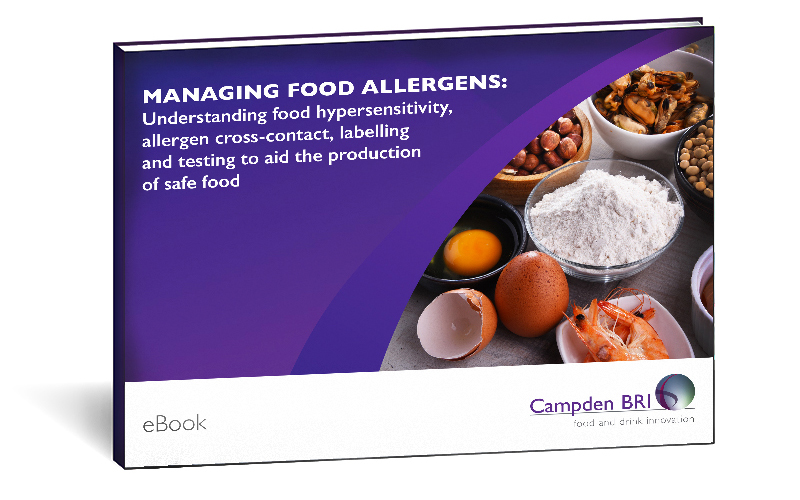
No matter where your business is on its food allergen management journey, we can help you control allergen risk with confidence. By working with us, your business can benefit from:
- Specialist allergen and food safety expertise;
- Practical, proportionate, risk-based advice;
- Support aligned with regulatory expectations and best practice;
- Confidence in controls, labelling and decision making.
You can also join our FREE allergens webinar on 10 September – “Allergen Controls: Are your PRPs actually protecting you and are you ready for future changes?”.

About Katie Carter
Katie has over 15 years’ experience in the food industry within the FMCG sector. Her career began as a Forensic Scientist before transitioning to food safety, quality, technical, quality systems and compliance roles within food commodity and beverage manufacturing.
Her expertise includes the implementation and continuous improvement of Food Safety Management Systems, allergen management, auditing, HACCP, TACCP and VACCP.
She specialises in food safety systems including allergen management within the Campden BRI Global Safety and Quality team, delivering training and consultancy to support clients in managing food safety risk and ensuring compliance.
How can we help?
If you’d like support in preventing food allergen labelling failures and ensuring robust controls, get in touch.
Managing food allergens with confidence
Protect consumers. Safeguard your brand. Strengthen compliance.