
Wildfire smoke and wine: Assessing the risk of smoke taint
2 September 2026 | Robert Pride, Senior Analytical Chemist – Wines Specialist
For many years, devastating wildfires have left a lasting mark on renowned wine regions in Australia and the United States, impacting not only vineyards but also the communities, families and livelihoods that depend on them.
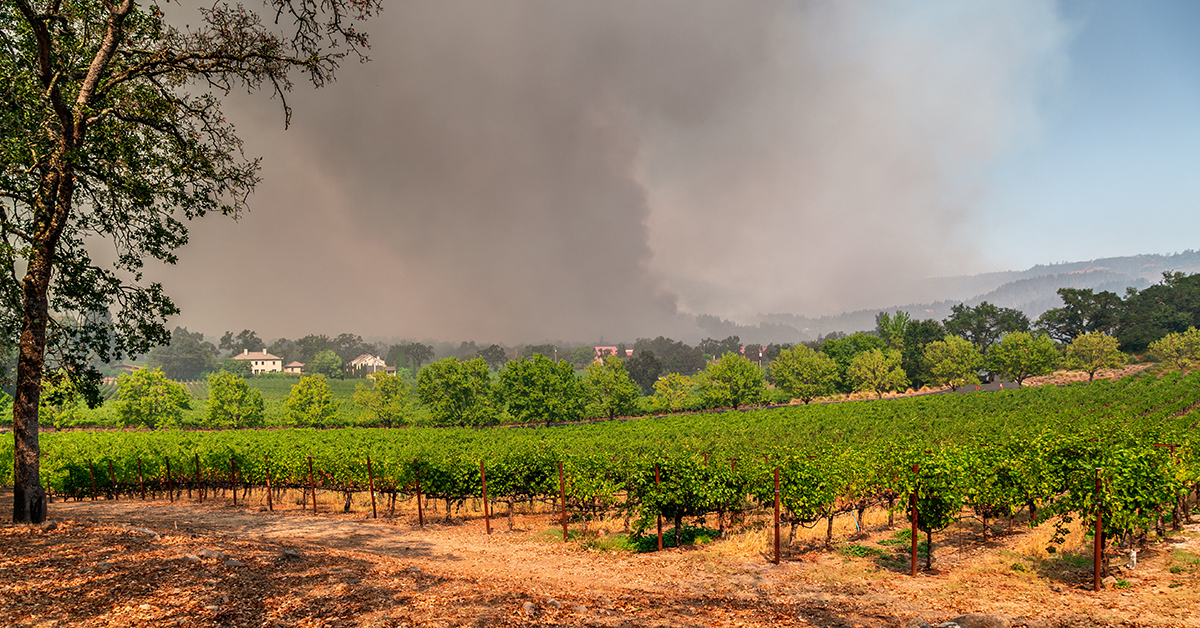
In 2026, Europe is facing one of its most severe wildfire seasons on record. Across France, Spain, Portugal, Italy and Greece, fast-moving fires have forced hundreds of thousands of people to evacuate their homes, while vast areas of countryside continue to burn. Beyond the immediate human tragedy, these fires are placing immense pressure on Europe's wine industry as vineyards and wineries face the threat of direct fire damage and smoke exposure.
The situation is particularly concerning in France, where wildfires have spread alarmingly close to major wine-producing regions such as Bordeaux. With evacuations already underway in affected areas, growers are confronting not only the risk of losing vineyards and infrastructure, but also the uncertainty of smoke taint affecting this year's harvest.
As climate-driven wildfire events become more frequent and intense, the resilience of Europe's wine industry is being tested as never before.
What is smoke taint?
One of the most significant, yet often overlooked, consequences of wildfires is smoke taint – a hidden threat that can compromise wine quality long after the flames have been extinguished.
As smoke drifts across vineyards, volatile smoke compounds can settle on grape skins, where they are absorbed and bind with naturally occurring sugars to form odourless compounds known as phenolic glycosides.
During fermentation, and even while the wine is being consumed, these compounds can release smoky volatile phenols, resulting in undesirable aromas and flavours often described as smoky, ashy, medicinal or reminiscent of burnt wood.
Importantly, vineyards do not need to be in the direct path of a wildfire to be affected. Smoke can travel tens or even hundreds of kilometres (though it is believed that volatile phenols will drop out after large distances), placing seemingly unaffected vineyards at risk and leaving growers with difficult decisions about harvesting, testing and potential financial losses.
For wine producers, understanding and assessing the risk of smoke exposure has become an increasingly important part of vineyard management as wildfire events become more frequent and severe.
When are grapes vulnerable to smoke taint?
Grapes are susceptible during all stages of berry development. However, the extent of smoke taint depends on several factors, including the grape variety, the duration and intensity of smoke exposure, and prevailing weather conditions.
When berries are exposed to volatile phenols, the vine naturally converts many of these compounds into glycosylated (bound) forms.
Although these bound compounds cannot usually be detected by smell in the fruit, they can later be broken down during fermentation, or while the wine is being consumed, releasing smoky, ashy and medicinal aromas and flavours.
Importantly, it doesn't take prolonged exposure to create a problem. A single, dense smoke event during berry development may be enough to produce detectable smoke taint.
Harvest: A race against time
Smoke exposure immediately before harvest presents one of the greatest challenges for wine producers. With little time available to evaluate fruit quality before picking, wineries are often forced to make rapid, high-stakes decisions that can have significant financial implications.
To reduce uncertainty, many producers will:
- Carry out rapid vineyard inspections to assess visible smoke exposure.
- Submit grape samples for laboratory analysis of volatile phenols and non-volatile phenolic glycosides.
- Perform small-scale trial fermentations (microvinifications) to determine whether smoke taint becomes evident in the resulting wine before committing to full-scale production.
Early assessment and timely analytical testing provide the information needed to make informed harvesting and winemaking decisions.
What are the factors that influence the risk of smoke taint?
The severity of smoke taint depends on several variables, including:
- Duration: Longer smoke exposure generally increases uptake.
- Smoke density: Thick, persistent smoke is more problematic than light haze.
- Distance from the fire: Smoke composition changes as it travels, affecting the types and concentrations of compounds present.
- Grape variety: Some cultivars appear more susceptible than others, partly due to differences in skin characteristics and flavour profile.
- Weather: Wind direction, humidity, rainfall and temperature influence how much smoke reaches and remains in the vineyard.
Why does smoke taint matter?
One of the greatest challenges of smoke taint is that it is often invisible.
A vineyard exposed to wildfire smoke may appear completely healthy, with grapes showing no obvious signs of damage or contamination. Yet beneath the surface, the fruit can contain elevated levels of smoke-derived compounds that may not reveal themselves until fermentation, or until the finished wine is tasted.
This uncertainty makes smoke taint particularly difficult and costly to manage.
Growers may have little indication of a problem before harvest, leaving them to make critical decisions about picking fruit, processing grapes or rejecting an entire crop with incomplete information. A poor decision can result in substantial financial losses, whether from discarding unaffected fruit or producing wine that ultimately fails to meet quality expectations.
For this reason, vineyards exposed to wildfire smoke during berry development increasingly rely on laboratory analysis and sensory evaluation to assess risk.
Testing for both volatile phenols and phenolic glycosides, often alongside small-scale trial fermentations (microvinifications), provides producers with the evidence needed to make informed harvesting and winemaking decisions.
As wildfires become more frequent and severe in wine-producing regions around the world, early assessment and robust analytical testing are becoming essential tools for protecting both wine quality and producer livelihoods.
What are the compounds associated with smoke taint testing?
Volatile phenols are a group of aromatic organic compounds that readily evaporate and contribute to the aroma and flavour of foods and beverages. In wine, they can be either desirable or undesirable, depending on their source and concentration.
Formation and uptake of smoke-related volatile phenols:
- Wood and other plant material contain lignin.
- During combustion, heat breaks lignin down into smaller aromatic molecules.
- These include volatile phenols such as guaiacol, cresols, and syringols.
- Smoke transports these compounds through the atmosphere.
- Ripening grape berries absorb the volatile phenols through their skins.
Once inside the berry, many volatile phenols are converted into phenolic glycosides (via the attachment of one or more sugar molecules). This process is a natural detoxification mechanism that makes the compounds less chemically reactive. Phenolic glycosides are typically present at low levels in grapes not exposed to smoke. Elevated levels indicate smoke exposure in grapes. These glycosides easily transfer into juice and can persist in smoke-affected wines. During fermentation, glycosides break down, releasing volatile phenols that cause smoke flavour (Hayasaka et al). High glycoside and volatile phenol concentrations in grapes are good predictors of smoke taint intensity in the resulting wine (Parker et al).
Smoke-derived volatile phenols are responsible for the distinctive aromas associated with smoke taint, often described as smoky, burnt, ashy, medicinal or reminiscent of charred wood. Beyond their impact on aroma, these compounds can also alter the palate, producing a persistent ashy, drying aftertaste that can linger long after the wine has been swallowed.
These compounds are particularly problematic because even relatively small amounts can have a noticeable impact on wine quality and consumer perception, making smoke taint one of the most challenging faults for wine producers to manage.
Smoke taint prevention, mitigation and remediation:
Prevention: Reducing smoke compound extraction:
Preventing smoke taint from entering the finished wine is far more effective than attempting to remove it later. Where smoke exposure is suspected, winemaking practices can be adapted to minimise the extraction of smoke-derived compounds from the grape skins.
Research has shown that whole-bunch pressing and the use of free-run juice generally result in lower concentrations of smoke-derived compounds than conventional crushing and extended skin contact. For white and rosé wines, fermenting juice without skins can significantly reduce the extraction of volatile phenols and their bound glycosides.
Additional practices that may help reduce smoke compound extraction include:
- Minimising skin contact wherever possible.
- Racking wines promptly off fermentation lees.
- Maintaining cool fruit and fermentation temperatures to limit extraction.
The suitability of these approaches will depend on the wine style being produced and may not be practical for red wine production, where skin contact is essential for colour and tannin extraction.
Mitigation: Reducing the sensory impact
Once smoke-related compounds are present in grapes or wine, a few winemaking interventions may reduce their sensory impact. However, none are entirely selective, and each has limitations.
Activated carbon is one of the most widely used fining agents for smoke-tainted wines and can reduce the concentration of certain volatile phenols. However, it also removes desirable aroma compounds, colour pigments and flavour components, potentially leaving wines with reduced complexity, balance, and varietal character.
Some winemakers also use oak alternatives or oenological tannins to help mask smoky or ashy characters and improve palate structure. While these approaches may lessen the perception of smoke taint, they do not remove the underlying smoke-related compounds, and their effectiveness can be variable.
Blending smoke-affected wine with unaffected wine may also reduce the perception of smoke taint, provided there is sufficient unaffected wine available. However, this approach should be considered with caution, as smoky and ashy characters can still be detected at very low concentrations
Remediation: Recovering smoke-tainted wines
For wines already affected by smoke taint, several remediation techniques have been explored, including:
- Activated carbon fining
- Enzymatic treatments
- Cyclodextrin-based adsorption technologies
- Reverse osmosis, often combined with adsorption systems
- Distillation for selected products
- Blending with unaffected wines
- Dilution where regulations permit
- Early release and consumption before smoke characters become more pronounced
While some of these techniques can reduce smoke-derived compounds, they often alter the wine's composition and may negatively affect colour, aroma, flavour, mouthfeel or long-term stability. In many cases, the treatment itself can compromise wine quality as much as the smoke taint it is intended to remove.
Prevention is better than cure
Despite decades of research, there is still no silver bullet for smoke-tainted grapes or wines.
The most successful strategy is to identify potential problems as early as possible through vineyard assessment, laboratory analysis of volatile phenols and phenolic glycosides, and targeted sensory evaluation.
By understanding the level of smoke exposure before committing fruit to production, wineries can make informed decisions that minimise both quality risks and financial losses.
Why test for smoke taint?
Smoke taint can have severe economic, operational, and reputational consequences for wine producers. Even when vines survive a wildfire, exposure to smoke can render grapes or finished wine unsuitable for sale, resulting in substantial financial losses.
Testing for smoke taint markers enables producers to assess the risk of smoke taint before harvest, providing valuable information to support difficult vineyard and winery decisions. Because smoke exposure rarely affects every vineyard block equally, producers may need to consider options such as:
- Harvesting only selected vineyard blocks.
- Picking earlier than planned.
- Separating fruit from different parcels.
- Diverting fruit to lower-value wine styles.
- Choosing not to harvest at all.
Winery processing costs
If producers decide to process smoke-exposed fruit, additional winemaking interventions may be required to minimise the sensory impact of smoke taint. These may include:
- Modifying winemaking techniques to minimise extraction.
- Reducing skin contact during fermentation.
- Applying specialised fining treatments.
- Using activated carbon, which may also remove desirable aroma compounds, flavour components and colour.
- Considering reverse osmosis and adsorption technologies.
These interventions increase production costs and do not always restore wine quality.
Market risk
If smoke-tainted wines reach the market, the consequences can extend well beyond the immediate vintage. Potential impacts include:
- Damage to brand reputation.
- Reduced customer confidence.
- Loss of sales.
- Increased difficulty maintaining export markets where consistent quality is expected.
For premium wineries, whose reputation is built on consistently producing high-quality wines, declassifying or discarding wine may be preferable to risking long-term brand damage.
Financial implications
- Unsold grapes.
- Reduced wine inventory value or discarded wine.
- Lost sales contracts.
- Reduced tourism.
- Damage to winery infrastructure.
Although insurance may provide some protection, coverage for smoke taint varies considerably and may not fully compensate producers for quality-related losses. As a result, some wineries may be required to absorb a substantial proportion of the financial impact themselves.
How does Campden BRI test for smoke taint?
When wildfire smoke threatens a vineyard, timely and reliable analysis can make the difference between harvesting with confidence and making costly decisions based on uncertainty.
Through our partnership with the Australian Wine Research Institute (AWRI), we provide access to internationally recognised, validated methodologies for assessing smoke taint in grapes, juice and wine. The AWRI has spent decades leading research into smoke taint, developing analytical methods and establishing baseline concentrations of smoke-derived compounds across a wide range of grape varieties and wine styles.
Our experienced analytical chemists use state-of-the-art gas chromatography-mass spectrometry (GC-MS) and liquid chromatography-mass spectrometry (LC-MS/MS) to accurately quantify both volatile phenols and phenolic glycosides, the key compounds associated with smoke taint. Stable isotope-labelled internal standards are incorporated throughout the analytical process to ensure excellent accuracy, precision and recovery.
Our testing service can be applied to:
- Grapes – to assess smoke exposure before harvest.
- Juice – to evaluate contamination before fermentation.
- Wine – to determine the extent of smoke taint and support quality assessments.
However, analytical results are only part of the picture. Through our collaboration with the AWRI, we combine robust laboratory data with expert interpretation, helping producers understand smoke taint risk, know the significance of their results, and make informed decisions about harvest timing, fruit acceptance and winemaking strategies.
As wildfire events become more frequent across wine-producing regions worldwide, access to reliable smoke taint testing and expert technical guidance has never been more important. Whether you need to assess fruit before harvest or investigate potential smoke taint in finished wine, we can provide the scientific evidence needed to support confident decision-making.
When should you submit samples prior to harvest?
Timing is critical when assessing smoke taint risk. Samples need to be submitted in time for results to be ready for making harvest decisions. See our smoke taint testing service page for turnaround times.
Early sampling provides the greatest opportunity to evaluate options and reduce uncertainty. Waiting until harvest, or after fruit has been processed, can significantly limit the actions available to producers and increase the risk of costly outcomes.
If your vineyard has been exposed to wildfire smoke during the ripening period, submitting samples as early as possible can provide valuable insights and support confident decision-making before harvest begins.
Need further assistance?
If you require further guidance on smoke taint, sample collection, shipping requirements or analytical testing, our technical experts are here to help. Whether you have questions before sampling, need advice on interpreting results or would like to discuss the most appropriate testing strategy for your vineyard or winery, our team can provide practical, science-based support.
Contact us today to discuss your requirements and find out how our smoke taint testing services can help you make informed decisions with confidence.

About Robert Pride
Robert Pride is Senior Analytical Chemist – Wines Specialist and manager of the Campden Wine Services laboratory.
Prior to joining Campden BRI, Robert was Area Manager – Laboratory for Pinnacle Drinks, a part of the Endeavour Drinks Group. Robert completed a Bachelor of Science – Forensic and Analytical chemistry at Flinders University before joining the Australian wine industry, where he has held technical positions for the last 12 years.
Robert has extensive experience managing ISO/IEC 17025 accredited laboratories at Yalumba and Vinpac International and is also a Technical Assessor for Australia’s accreditation body, the National Association of Testing Authorities (NATA). Robert developed extensive knowledge of wine chemistry, microbiology, production, and packaging through his time with Yalumba and Pinnacle Drinks with a focus on continuous improvement, food safety and process driven analysis. Robert is also a former Chairperson and Statistics Secretary of the Interwinery Analysis Group (IWAG), a not-for-profit proficiency testing association and global support network with accreditation to ISO 17043 and over 200 worldwide members.
Robert has recently relocated to the UK where he hopes to help improve the growing wine industry.
How can we help?
Whether you have questions before sampling, need help interpreting results or would like to discuss a testing strategy for your vineyard or winery, we can provide practical, science-based support.
Wine smoke taint testing
Test your grapes, juice and wine samples to get the insights and answers that you need.
References
- Hayasaka, Y., Baldock, G. A., Parker, M., Pardon, K. H., Black, C. A., Herderich, M. J., Jeffery, D. W. 2010. Glycosylation of smoke-derived volatile phenols in grapes as a consequence of grapevine exposure to bushfire smoke. J. Agric. Food. Chem. 58: 10989-10998.
- Parker, M., Jiang, W., Bilogrevic, E., Likos, D., Gledhill, J., Coulter, A.D., Cowey, G.D., Simos, C.A., Francis, I.L., Herderich, M.J. 2023. Modelling smoke flavour in wine from chemical composition of smoke‐exposed grapes and wine Aust. J. Grape Wine Res. 2023: 4964850.
- Parker, M., Osidacz, P., Baldock, G. A., Hayasaka, Y., Black, C. A., Pardon, K. H., Jeffery, D. W., Geue, J. P., Herderich, M. J., Francis, I. L. 2012. Contribution of several volatile phenols and their glycoconjugates to smoke-related sensory properties of red wine. J. Agric. Food. Chem. 60: 2629-2637.