

Smoke taint testing
To discuss your needs
Providing vineyards and wineries with scientific evidence to support confident decision-making after wildfire smoke exposure
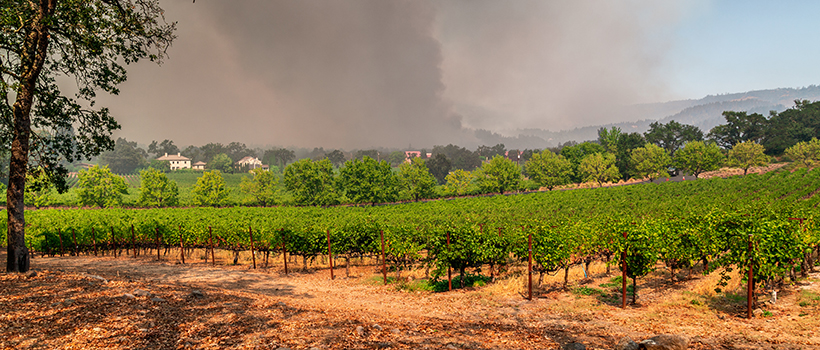
For many years, devastating wildfires have left a lasting mark on renowned wine regions in Australia and the United States, impacting not only vineyards but also the communities, families and livelihoods that depend on them. In more recent times, Europe is seeing an increase in the same issue.
These fires threaten Europe's vineyards and wineries direct fire damage and the impacts smoke exposure – including smoke taint, which compromise wine quality long after the flames have been extinguished.
Once smoke taint has occurred, there is no single treatment capable of completely restoring wine quality. Early risk assessment and analytical testing remain the most effective tools for managing smoke taint.
Testing for smoke taint markers enables producers to assess the risk of smoke taint before harvest, providing valuable information to support difficult vineyard and winery decisions.
Through our partnership with the Australian Wine Research Institute (AWRI), we provide access to internationally recognised, validated methodologies for assessing smoke taint in grapes, juice and wine.
Our experienced analytical chemists use state-of-the-art gas chromatography-mass spectrometry (GC-MS) and liquid chromatography-mass spectrometry (LC-MS/MS) to accurately quantify the key compounds associated with smoke taint (both volatile phenols and phenolic glycosides).
Stable isotope-labelled internal standards are incorporated throughout the analytical process to ensure excellent accuracy, precision and recovery.
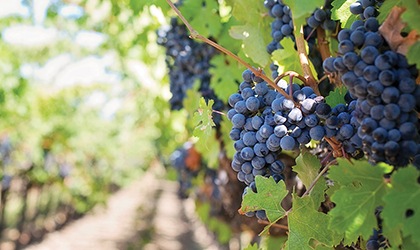
- Grapes – to assess smoke exposure before harvest.
- Juice – to evaluate contamination before fermentation.
- Wine – to determine the extent of smoke taint and support quality assessments.
Benefits of partnering with Campden Wine Services
Through our collaboration with the AWRI, we combine robust laboratory data with expert interpretation – helping producers understand the significance of their results and make informed decisions about harvesting, vinification, blending or remediation.
When should you submit samples prior to harvest?
Timing is critical when assessing smoke taint risk. To provide growers and winemakers with the information they need before making harvest decisions, we recommend submitting smoke-exposed grape samples approximately 3 weeks prior to the anticipated harvest date.
This timeframe allows sufficient time for samples to be received, prepared and analysed for both volatile phenols and phenolic glycosides, the key compounds associated with smoke taint. It also enables our technical experts to interpret the analytical data and assess the potential impact on wine quality.
How can European wineries submit samples to us?
We accept grape, juice and wine samples from across Europe for smoke taint analysis. To ensure accurate results and minimise delays, it is important that samples are collected, packaged and shipped correctly.
1. Collect representative samples
Representative sampling is essential to obtain meaningful analytical results. Guidance on collecting, packaging and transporting grape samples following vineyard smoke exposure can be found in our smoke taint sample guide.
2. Check UK plant health requirements
Following Brexit, the import of fresh grapes from the European Union into Great Britain is subject to UK plant health and biosecurity regulations.
Depending on the country of origin and current import requirements, shipments may require:
- A phytosanitary certificate issued by the exporting country's National Plant Protection Organisation (NPPO).
- Appropriate customs declarations.
- Compliance with any applicable UK import controls for plant products.
As import requirements can change, we recommend checking the latest regulations before dispatching samples.
3. Declare the shipment clearly
To help prevent unnecessary delays at customs, the package should be clearly labelled with the following statement:
"Fresh grape samples for laboratory analysis only – not for planting or human consumption."
This declaration helps customs authorities understand the purpose of the shipment and supports the smooth clearance of samples for laboratory testing.
UK wine producers membership
We're now offering a ‘UK wine producers membership’, designed specifically for UK wineries and vineyards to access high-quality support in a way that suits the pressures and realities of the industry.

Key services


Accelerated shelf-life testing for beverages
Predict beverage shelf-life faster and launch products confidently


Pre-bottling and post-bottling analysis
Bottle with confidence: Protect wine quality from tank to table

Smoke taint testing
Providing vineyards and wineries with scientific evidence to support confident decision-making after wildfire smoke exposure


Submit a sample
For guidance on how and where to send samples, please see our sample guidance page
Wine and spirits
Explore our wine and spirits related courses including; HACCP – intermediate for winemakers and wine analysis and tutored faults tasting
Where we refer to UKAS Accreditation
The Campden BRI group companies listed below are accredited in accordance with the recognised International Standard ISO17025:2017 by the United Kingdom Accreditation Service (UKAS). The accreditation demonstrates technical competence for a defined scope of methods, specific to each site, as detailed in the schedules of accreditation bearing the testing laboratory number. The schedules may be revised from time to time and reissued by UKAS. The most recent issue of the schedules are available from the UKAS website www.ukas.com. Campden BRI (Chipping Campden) Limited is a UKAS accredited testing laboratory No. 1079