
From great idea to great product: How to test and refine a new food product concept
21 July 2026 | Phil Spratt, Product and Ingredient Development Lead
Every successful food product starts with a single idea. It might be inspired by a gap in the market, changing consumer demands, a new ingredient, or simply a fresh take on a familiar favourite. However, having a good idea is only the beginning.
The real challenge lies in determining whether that idea can become a product that consumers want to buy and manufacturers can produce consistently and profitably.
Rather than rushing straight into recipe development or production, food businesses should take the time to refine and test their concept. Our structured feasibility process helps identify potential issues early, improve the product, and increase the likelihood of a successful launch.
This blog covers some key considerations and steps in creating and evolving a successful new food product through careful refinement.
Start with a clear product vision
Before developing recipes or sourcing ingredients, define exactly what your product is trying to achieve. Ask yourself:
- Who is the target consumer?
- What problem does the product solve?
- What makes it different from existing products?
- Why would someone choose it over competitors?
Having a clear purpose provides direction throughout the development process and helps ensure every decision supports the end goal.
Validate the consumer need
It's easy to become attached to a new idea, but successful products are built around genuine consumer demand rather than assumptions.
Talk to potential customers and consumers early. This could involve informal interviews, online surveys, focus groups, or sharing early concepts with retailers and distributors. The aim is to understand whether your product addresses a real need and whether consumers are willing to pay for it.
This stage is also an opportunity to explore which product attributes resonate most with consumers. Understanding what matters most to your audience will help shape both the product itself and how it is positioned in the market.
Consider regulatory claims from the beginning
Product claims are often one of the first things consumers notice on packaging, making them a powerful marketing tool. Claims such as "high in protein", "source of fibre", "low sugar", "gluten-free", "vegan" or "high in vitamin D" can influence purchasing decisions and help products stand out on crowded shelves.
However, successful claims must also be technically achievable and legally substantiated.
Many nutrition and health claims are governed by strict legislation, with specific compositional criteria that products must meet before they can be used. For this reason, regulatory considerations should begin at the concept stage rather than at recipe development.
Early evaluation allows developers to ask important questions such as:
- Which claims are most meaningful to the target consumer?
- Which claims would provide a genuine competitive advantage?
- Can the proposed formulation legally support those claims?
- Would small formulation changes enable stronger or more valuable claims?
Developers also need to consider whether the ingredients selected can withstand the realities of manufacturing and storage. Functional ingredients vary in their stability and suitability for different manufacturing processes. We help manufacturers select the most appropriate ingredient solutions to support product performance and claims throughout shelf-life.
Taking this approach from the outset reduces the risk of reformulation, failed shelf-life studies, packaging redesigns, or unsupported claims later in development.
Develop prototypes to explore the idea
Once you've identified a promising product concept, the next step is to bring it to life through prototype development. At this stage, the aim is to determine whether the idea is technically feasible and has the potential to succeed in the market.
Approaches like rapid prototyping enable developers to quickly create and compare multiple formulations, exploring different ingredients, flavours, textures, nutritional profiles or processing approaches.
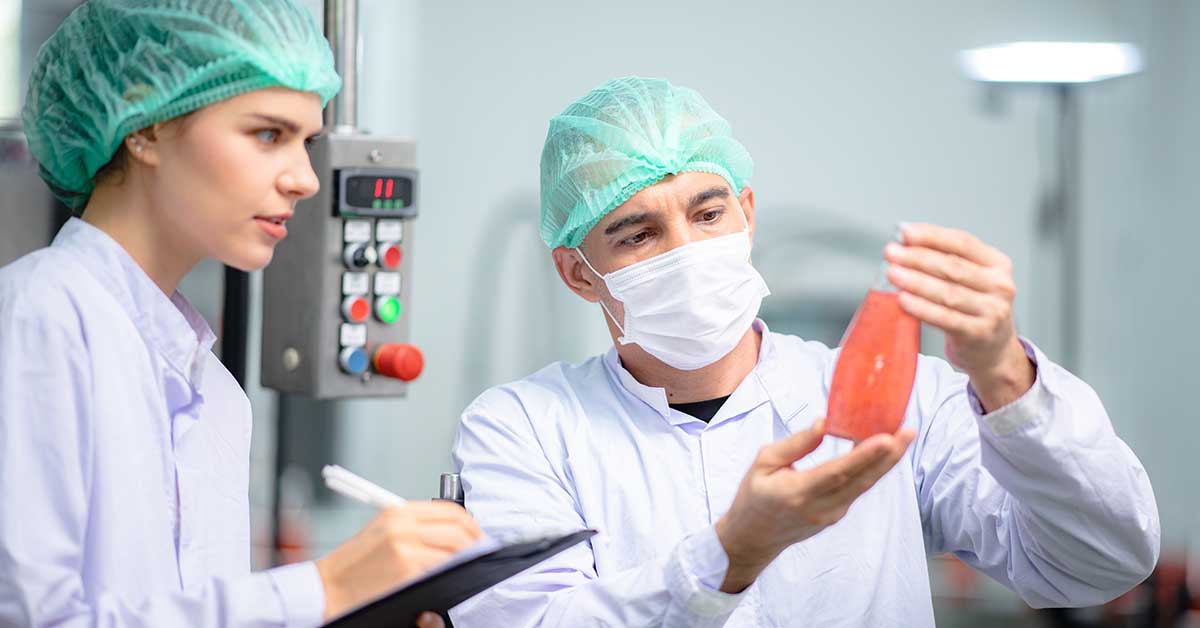
Each prototype should be designed to answer specific questions, such as whether a particular ingredient delivers the desired functionality, how changes affect flavour or texture, or whether the formulation has the potential to support the intended nutrition or health claims.
We view prototype development as an iterative process of testing, learning and refining.
Each round of feedback reduces uncertainty, strengthens the concept, and builds confidence that the product is both commercially attractive and technically achievable before progressing to larger-scale development.
Consider shelf-life early
It is important to establish the product’s required shelf-life as early as possible as this will influence the choice of ingredients, manufacturing method, packaging and storage.
Consideration should be put into assessing how the product is likely to change over time, including:
- Microbiological safety
- Flavour and colour stability
- Texture changes
- Packaging performance
It is unlikely to be possible to fully validate a product’s stability at this stage, however we can help manufacturers to understand the potential stability risks associated with new ingredients or recipes as well as design early-stage stability tests to help you mitigate these.
Assess manufacturing feasibility early
A successful food product must not only appeal to consumers but also be practical to manufacture. Considering manufacturing feasibility early in development helps identify potential challenges before significant time and resources are invested.
At this stage, the objective is to understand whether the concept fits within realistic manufacturing capabilities, rather than proving the production process itself.
Questions to consider include:
- Can the product be manufactured using existing equipment and production lines?
- Will specialist processing technologies or significant capital investment be required?
- Are suitable contract manufacturers or production facilities available?
- Can key ingredients be sourced consistently and at the required scale?
- Are there any formulation characteristics (such as viscosity, particle size, pH or water activity) that could make manufacturing more challenging?
- Is suitable packaging available that meets functionality, shelf-life and sustainability objectives?
We help clients to consider these factors early and simplify manufacturing while improving product stability and reducing costs.
Evaluate commercial viability
Even an excellent product must make financial sense.
As your concept develops, calculate:
- Ingredient and packaging costs
- Manufacturing costs
- Distribution expenses
- Expected retail pricing
- Target profit margins
A product may need further refinement to balance quality with affordability. Sometimes small formulation changes or packaging adjustments can significantly improve commercial viability without compromising the consumer experience.
FREE webinar - Ingredient characterisation: Solving product quality challenges through smarter ingredient testing
This webinar will explore how ingredient characterisation can be used to support NPD, benchmarking, reformulation and specification setting.
Final thoughts – deliver real value
By taking the time to challenge assumptions, test performance, gather consumer feedback, and improve every aspect of the concept, businesses can transform a promising idea into a product that is ready for the realities of the marketplace.
Testing the feasibility of a food product idea is about reducing uncertainty before committing significant investment.
Successful businesses challenge their assumptions early, gather evidence and refine their ideas based on technical knowledge and consumer insight.
The most effective feasibility programmes are both robust and agile. For example, they use rapid prototyping to explore multiple solutions, seek honest consumer feedback on early concepts, assess regulatory, shelf-life and manufacturing considerations from the outset, and adapt the idea as new information emerges.
Small changes made early are far easier (and far less expensive) than major redesigns later in development.
By identifying technical, commercial or consumer challenges early, businesses can avoid costly investment in concepts that are unlikely to succeed and instead focus their resources on those with genuine market potential.
Ultimately, the strongest product ideas aren't simply the most innovative – they're the ones that have been rigorously tested, thoughtfully refined, and shown to deliver real value for both consumers and the business.
Download our FREE Product Optimisation eBook today! An effective way to unlock elusive value and potential from your products
How we can help
We support food businesses at every stage of innovation and NPD, including early product feasibility. Our experts help clients turn ideas into consumer-validated, technically achievable and commercially viable concepts.
By bringing the relevant product development, regulatory, consumer insights, shelf-life and manufacturing expertise together within one organisation, we provide a joined-up approach that helps clients identify opportunities, risks and practical next steps early.
Our teams work together to help you:
- Understand consumer appeal through focus groups, questionnaires and concept testing
- Develop and refine prototypes quickly using co-located development kitchens and consumer testing facilities
- Navigate the regulatory complexities across different regions (we offer global regulatory services across more than 80 countries)
- Identify suitable ingredients, processes and legally supportable claims for your target markets
- Assess shelf-life, stability and manufacturing feasibility early to reduce risk before scale-up
This integrated approach helps businesses make evidence-based decisions sooner, avoid costly reformulation later, and focus investment on product ideas with genuine market potential.
How can we help?
For support with testing and refining a new food product concept, get in touch.
Product innovation, optimisation and lifecycle support
End-to-end product development, onward quality management and more for your food and drink products.