
Five reasons prototyping is crucial in food and drink product development
17 August 2026 | Phil Spratt, Product Development Team Lead, and Sarah Thomas, Consumer and Sensory Insights Section Manager
When you have a new food or drink product concept, there can be a lot of unknowns that need to be worked through to see if your product is feasible and viable. Product prototyping is a great way to do this, and is arguably crucial to successful product development.
Food and drink product prototyping is an iterative process of preliminary versions of your products to test ideas / recipes, gather feedback, and refine the final solution. Along the way you can ensure that your product is technically feasible, that it has the potential to succeed in the market and that you work through any regulatory standards, risks and potential challenges.
Each prototype should be designed to answer specific questions, such as whether a particular ingredient delivers the desired functionality, how changes affect flavour or texture, or whether the formulation has the potential to support the intended nutrition or health claims.
Here we look at five key reasons why prototyping is so important in food and drink product development.
Food and drink product prototyping can:
1. Make sure your product is feasible in practice and fit for manufacture
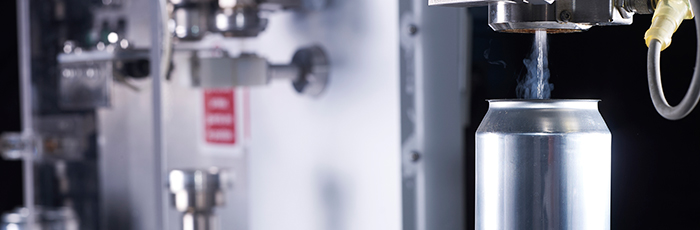
Once you've identified a promising product concept, the next step is to bring it to life through prototype development. A successful food product must not only appeal to consumers but also be practical to manufacture. At the prototyping stage, the aim is to determine whether the product idea is technically feasible, fits within realistic manufacturing capabilities and has the potential to succeed in the market.
Considering manufacturing feasibility early in development helps identify potential challenges before significant time and resources are invested. Sometimes challenges at prototype scale are not an issue in full scale manufacture – but it is rarely this way around. Often, issues at the prototyping scale (and even issues that do not yet present themselves) will create even greater challenges when producing on a factory production line.
For this reason, you need to find and address issues early through prototyping (rather than discovering issues at the more expensive pilot plant, or even production plant, scale).
2. Check whether consumers want it and like it
Through concept and prototype testing with consumers, you can make sure that your product is needed by and relevant to consumers, and that it fits with their lifestyle. Beyond that, they also need to like how the product looks, smells, tastes, feels and more.
Using prototyping allows your refinement process to be guided by consumer feedback, so that your final product will be purchased, enjoyed and re-purchased by your target consumers and you can conquer your market with success.
Developing your product without getting consumer feedback on prototypes risks consumer insights being factored in too late – which risks potentially wasting development resources on a product that is not viable or having to make costly changes at a later stage in the process.
3. Prevent getting caught out later – assess risks and regulatory considerations
Physically making up your product (even at prototype / kitchen / lab scale) can help you to identify the risks that may be involved in the manufacture at scale. In this way, prototyping can be a proactive, evidence‑based tool for identifying potential hazards, validating processes, and ensuring compliance before pilot-scale or factory trial production.
As well as potential food safety and quality risks, prototyping is a great, early opportunity to start to look at the regulatory considerations surrounding your product. This way, products that are not viable (e.g. the proposition relies on a health / nutrition claim that is not technically feasible) can be ruled out, regulatory considerations can be investigated further, and products can be refined to fulfil the necessary regulatory requirements.
4. Identify and resolve challenges early
Making and testing your product, even at this early stage/scale, can help you to identify and resolve challenges. For example, prototyping can be a really a useful vehicle for early stability screening to see if your intended shelf-life is likely to be feasible.
As is the theme with all these points, early identification is the key to resolving issues before it is either too late or more costly to do so. Whether the nature of the challenge is manufacturing feasibility, consumer response, regulatory restrictions or recipe stability, product prototyping facilitates early identification for you to either prevent wasted resources or make the refinements needed to overcome the challenge.
Download our FREE Product Optimisation eBook today! An effective way to unlock elusive value and potential from your products
5. Produce a refined, optimised product
Product prototyping is an essential tool in creating and evolving a successful new food/drink product through careful refinement. Each round of production / analysis / consumer feedback reduces uncertainty, strengthens the concept, and builds confidence that the product is both commercially attractive and technically achievable before progressing to larger-scale development.
As well as preventing, finding and addressing challenges through prototyping, it can also be used to fully optimise your product, so that you have exactly the right balance of value, quality and cost that will set your product up for success in the market.
How we can help
Ensuring compliant, successful and cost-effective new products can be challenging, but we are here to help with product prototyping and all other elements of your product innovation, optimisation and lifecycle.
FREE webinar - Ingredient characterisation: Solving product quality challenges through smarter ingredient testing
This webinar will explore how ingredient characterisation can be used to support NPD, benchmarking, reformulation and specification setting.
We bring together all the expertise you need to make the right decisions, overcome challenges and conquer your market. Across all elements of your product and its production, we are here to help with every step of the process – from ideation through to successful launch, as well as managing onward quality alongside future changes and risks.
No matter your challenge or stage of project, our team of technical experts can provide you with the right support, tailored to your needs.

About Sarah Thomas
Sarah is an experienced consumer insights practitioner, whose background in qualitative research provides a skill set that is sensitive to understanding the complexities of individuals’ thoughts, feelings, and behaviours. Sarah works closely with clients to fully comprehend their research needs and respond with tailored study designs that deliver solutions to technical challenges and/or inform new product development.
How can we help?
If you’d like to explore prototyping support, get in touch.
Product innovation, optimisation and lifecycle support
End-to-end product development, onward quality management and more for your food and drink products.