
Consumer acceptance of food product shelf-life extension
1 June 2026 | Dave Cole, Project Manager (Consumer Insights)
Due to high and increasing costs, many food manufacturers are under increasing pressure to optimise operations and reduce waste, while maintaining value to consumers. One of the most common strategies we’ve seen from recent projects is a renewed focus on extending product shelf-life.
Whether driven by supply chain efficiency, sustainability goals, or price sensitivity, clients across categories are asking the same key question:
How far can we extend shelf-life without compromising the consumer experience?”
While microbiological safety and product stability data are essential pieces of the puzzle, technical results alone cannot fully answer that question. While a product may remain microbiologically safe beyond its original shelf-life, this does not guarantee consumers will continue to like it or find it acceptable.
This is where our Consumer Insights team plays a crucial role in helping clients understand not just whether shelf-life can be extended, but how far it can go before it meaningfully affects consumer liking and purchase.
Shelf-life is traditionally defined by microbiological or chemical stability, or by quality grading measures. But for consumers, the experience is far broader.
Factors affecting consumer perception
Over time, even subtle changes can influence:
- Flavour balance;
- Texture and mouthfeel;
- Appearance and colour;
- Aroma and freshness cues;
- Overall liking and willingness to repurchase.
Our work with clients consistently shows that consumer perception can be the true limiting factor when considering shelf-life extension. Identifying this limit early helps manufacturers avoid unnecessary reformulation costs, packaging changes, or delays in launching an extended-life product.
Analysing the consumer experience of extended life products
We support clients in understanding how far their product’s shelf-life can realistically be extended without compromising consumer satisfaction.
We do this by focusing on two key areas:
1. Determining the point at which liking begins to decline
Through controlled consumer testing at multiple shelf life points, we show where acceptance significantly begins to drop. This provides clients with a clear, evidence-based understanding of the true extension potential.
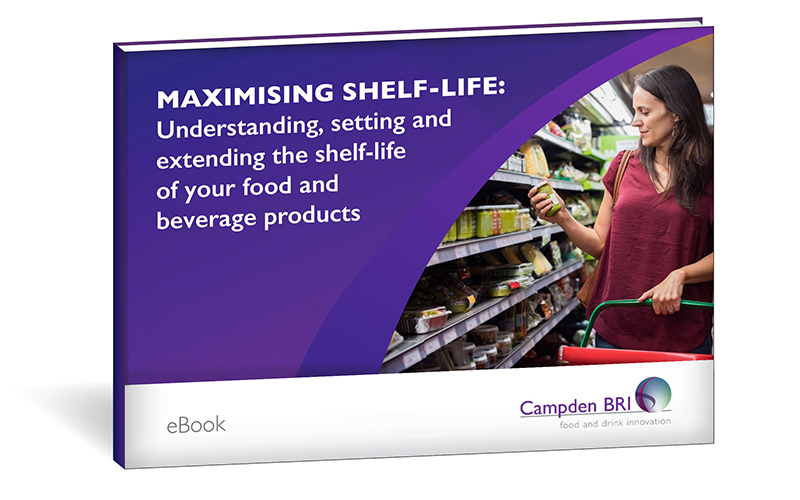
Download the complete Maximising Shelf-life eBook, for free, to unlock the tools for measuring and maximising the shelf-life of your food and drink products whilst ensuring their safety and quality.
2. Identifying which product attributes are most and least affected
Not all sensory changes are equal. Some products show early shifts in aroma, and others in texture or visual appeal. Our analysis pinpoints exactly which attributes change, how noticeable those changes are to consumers, and how much they matter in terms of overall liking and purchase intent.
This insight helps development teams focus their resources where they matter most; ensuring the consumer experience remains strong while avoiding unnecessary reformulation.
With shoppers increasingly value-conscious, expectations around product quality are high—especially for items purchased regularly.
Even a small perceived decline in quality following a shelf-life extension can have a disproportionate consumer impact on repeat purchase and brand trust.
Consumer research helps manufacturers:
- Protect product quality and brand reputation;
- Reduce risk when exploring shelf-life optimisation;
- Make confident, evidence-based decisions;
- Understand not just what changes, but how much those changes matter.
How our Consumer Insights team can help
In challenging economic conditions, striking the right balance between value and quality becomes more critical than ever.
Our Consumer Insights team has supported a wide range of food and drink businesses in assessing the sensory and perceptual implications of extending their products’ shelf-life. By grounding decisions in robust, real-world consumer data, we help clients create products that remain both stable and appealing for longer.
If you’re exploring shelf-life extension and want to understand how consumers will respond, we’re here to support you every step of the way.
How can we help you?
If you’re exploring shelf-life extension and want to understand how consumers will respond, get in touch.
More on shelf life
Your one-stop shop for food and drink shelf-life: From product development and validation to troubleshooting and extension.